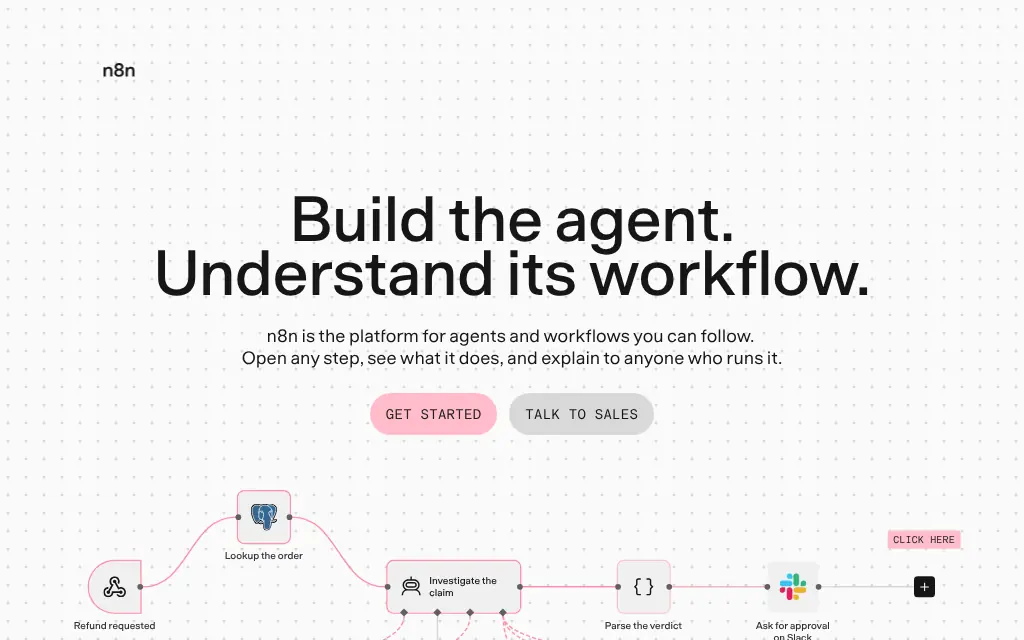
Self-hostable workflow automation with AI Agent nodes and an agent builder
Hermes Agent
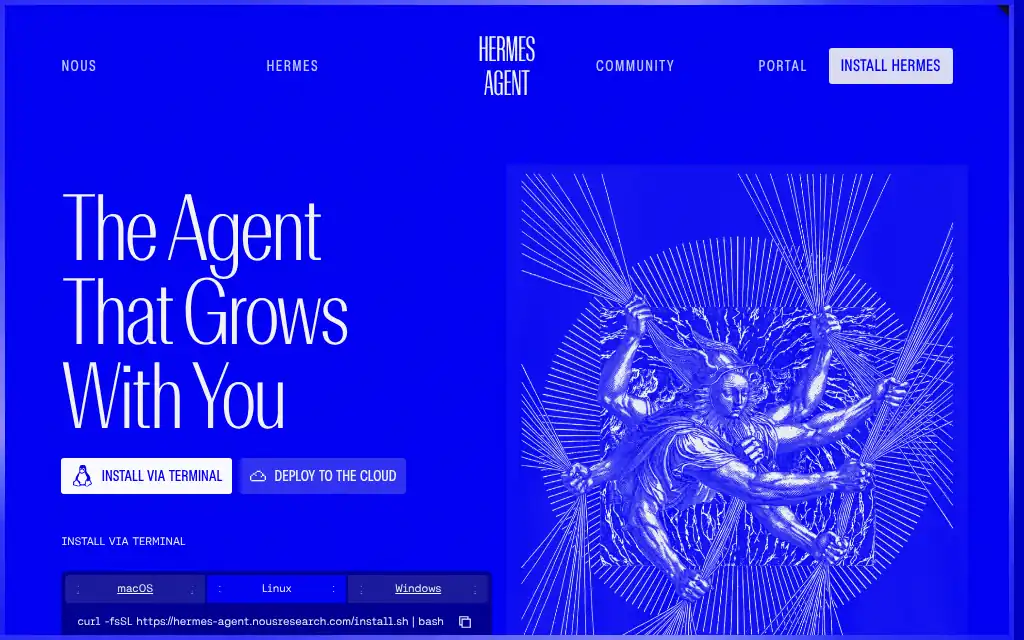
Self-hosted open-source AI agent that writes its own skills, in 20+ chat apps
FreemiumAgents
hermes-agent.nousresearch.comExplore the product
AT A GLANCE
- Pricing
- Freemium
- Categories
- Agents
- Listed
- Nov 2026
- Updated
- Nov 2026
Details about Hermes Agent
Short verdict: Hermes Agent is Nous Research's open-source personal agent: you install it on a laptop, a $5 server or Hermes Cloud, pick any model, and talk to it from the terminal, a desktop app or more than 20 chat apps. What sets it apart is the learning loop: it keeps memory files, writes reusable skills from tasks it has solved and can search its own past sessions. The software is MIT-licensed and free; Nous makes money from an optional Nous Portal plan ($20 to $200 a month) that bundles models, hosted tools and one cloud agent. The catch is the security model, which Nous states plainly: by default the agent runs shell commands on your own machine, and the only real boundary is the container or VM you put it in. It suits technical users who want a self-hosted assistant on their own terms; people who want a finished app with no setup should look at hosted agents instead.
How we reviewed it: We did not install or run Hermes Agent: it is an autonomous agent with shell access, and this is a public-evidence review. On 12 November 2026 we read the Hermes Agent site and its pricing table, the docs (installation, security, messaging gateway), the comparison page Nous publishes, the GitHub repository (README, SECURITY.md, releases) and the GitHub Advisory Database, and checked the PyPI package. We did not create a Nous Portal account, so plan limits are as Nous states them.
What Hermes Agent costs and includes
| Item | Hermes Agent, 12 November 2026 |
|---|---|
| Type | Self-hosted personal AI agent with memory, skills, scheduled jobs and subagents; terminal UI, desktop app and messaging gateway |
| License | MIT, at github.com/NousResearch/hermes-agent (262.9k stars, 59.2k forks) |
| Software price | Free; you pay your model provider, or nothing with local models |
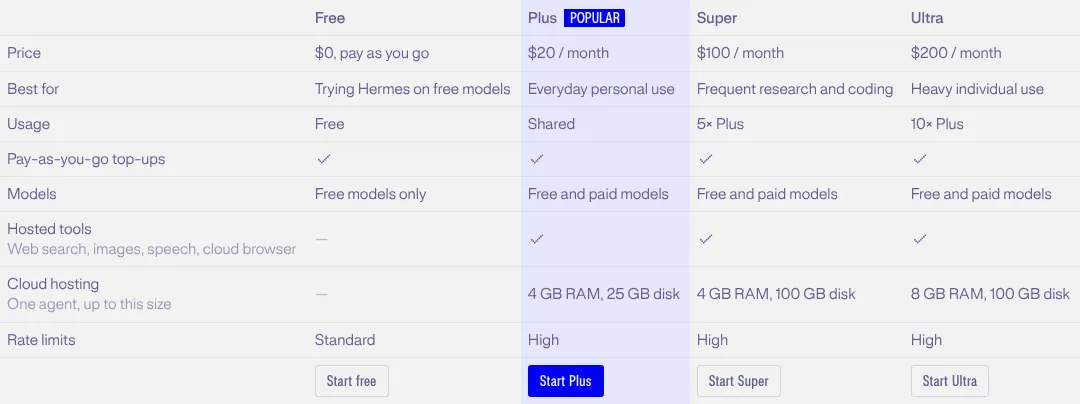
| Nous Portal (optional) | Free ($0, pay as you go, free models only), Plus $20 a month, Super $100 (5x Plus usage), Ultra $200 (10x Plus), per Nous |
| Hermes Cloud | One hosted agent with every paid plan: 4 GB RAM and 25 GB disk on Plus, 4 GB and 100 GB on Super, 8 GB and 100 GB on Ultra; deploying needs $2 in credits or a subscription |
| Where it runs | Linux, macOS, WSL2, native Windows, Android (Termux), Docker and Nix; desktop app for macOS 12+ and Windows 10/11 |
| Models | Nous Portal, OpenRouter, OpenAI, any OpenAI-compatible endpoint and local models; switch with hermes model |
| Chat apps | Telegram, Discord, Slack, WhatsApp, Signal, Matrix, Email, SMS, Microsoft Teams, Google Chat, Home Assistant and more: 20+ platforms from one gateway, per the docs |
| Releases | v0.23.1 on 10 November 2026, v0.23.0 on 5 November, v0.22.0 on 14 October; 48 releases since v0.2.0 on 12 March 2026, plus nightly canary builds |
What sets Hermes Agent apart
A learning loop you can inspect
Hermes keeps what it learns in plain files: MEMORY.md for facts and USER.md for what it knows about you, with periodic nudges to save things worth keeping. After a complex task it can write a skill, a reusable procedure in the agentskills.io format, and improve it the next time it is used. Past sessions are indexed with SQLite full-text search and summarized on recall. Because these are files in ~/.hermes, you can read, edit or back them up, which Nous recommends when you move machines.
It runs where you put it
Six built-in terminal backends decide where the agent's shell commands run: the local host, Docker, SSH, Modal, Daytona or Vercel Sandbox. Modal and Daytona hibernate when idle, so an always-on agent can cost little between tasks. You can also skip servers entirely: every paid Nous Portal plan includes one Hermes Cloud agent, and the same agent answers from Telegram or Slack while it works on a remote machine.
Any model, one optional bill
Hermes is not tied to Nous's own models. You can bring keys for OpenRouter, OpenAI or any OpenAI-compatible endpoint, run local models, or sign in with ChatGPT to use Codex models, per Nous's comparison page. Nous Portal is the shortcut: one OAuth login (hermes setup --portal) covers a model plus web search, image generation, text-to-speech and a cloud browser, which otherwise need separate accounts. The homepage says paid tiers include 200+ models while the README says 300+; we could not check which is current.
Migration from OpenClaw is built in
hermes import-agent openclaw copies an OpenClaw setup: SOUL.md, memories, user-created skills, command allowlists, messaging settings and, only with --migrate-secrets, allowlisted API keys. A --dry-run preview shows what would move. The same importer reads Claude Code, Codex and Cursor settings.
Security: what the defaults mean
Nous's SECURITY.md is unusually direct: "The only security boundary against an adversarial LLM is the operating system." The approval gate, output redaction and the Skills Guard scanner are described as heuristics, not containment. What that means in practice:
The default backend is your machine. Shell and file tools run on the host unless you choose Docker, SSH or a cloud sandbox. Even then, skills, plugins, MCP servers and the code-execution tool run in the agent's own process; only running the whole agent in Docker or NVIDIA OpenShell confines everything.
Approvals are on, but judged by a model. The default
smartmode lets an auxiliary LLM auto-approve low-risk commands and deny dangerous ones;manualalways asks, andoff(or--yolo) asks nothing. Cron, one-shot and webhook sessions deny dangerous commands by default.Skills and plugins are your responsibility. Third-party skills "execute arbitrary Python at import time", so Nous asks you to read their code before installing; malicious community skills are out of scope for its security reports.
Chat access needs an allowlist. Network-facing adapters must refuse work until you configure who may talk to the agent, and DM pairing is supported.
The repository has no published security advisories, and Nous runs no bug bounty. A search of the GitHub Advisory Database for "Hermes Agent" on 12 November 2026 returned 46 entries, one unrelated; most are unreviewed CVEs rated Low, but they include a Critical supply-chain issue in the bundled MCP component (fixed in 0.19.0) and a High-rated remote code execution in versions 0.18.2 to 0.21.0. Keep it updated.
Limits and costs to watch
Model costs are separate. The agent is free, but a busy agent with memory and subagents sends a lot of tokens; Nous publishes multipliers for Portal plans (Super is 5x Plus), not token or task counts.
Fast-moving code. v0.23.0 alone changed about 8,720 files from roughly 1,950 merged pull requests, per its release notes, and 5,000+ issues are open. Expect changes between versions.
PyPI lags. The
hermes-agentpackage on PyPI is at 0.19.0 from 20 July 2026; install with the official script or desktop app to get current releases.Setup is technical. The CLI, a YAML config and a gateway per chat app; the desktop app and Hermes Cloud remove some of it, not all.
Pros and cons
Pros
MIT-licensed and free, with no lock-in to Nous's models or cloud.
Memory and self-written skills are plain files you can read, edit and back up.
Six execution backends, including serverless ones that idle cheaply, plus an optional hosted agent from $20 a month.
A security policy that says exactly where the boundaries are.
Cons
Runs shell commands on your host by default; real isolation is your job.
Default approvals rely on an LLM's risk judgment.
Third-party skills and plugins run with full agent privileges.
Very fast release pace and a stale PyPI package.
Hermes Agent vs OpenClaw and other alternatives
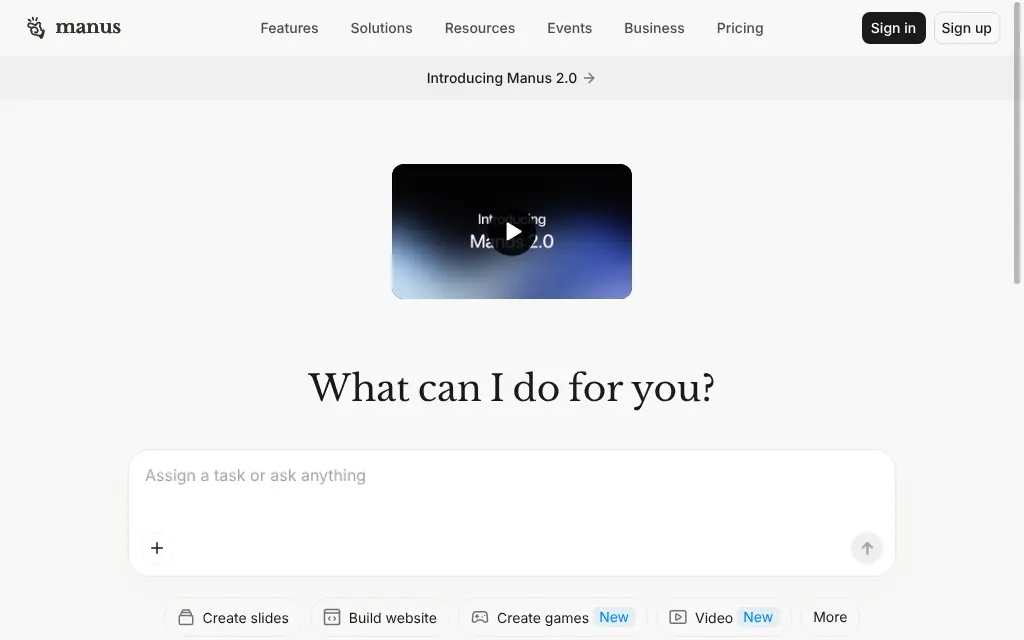
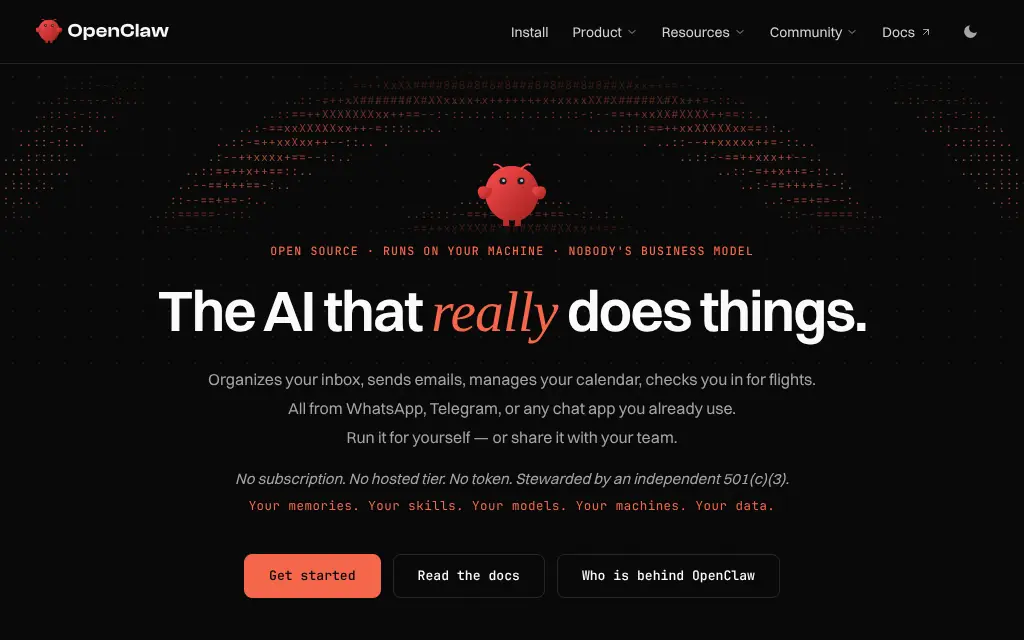
OpenClaw is the closest match: also MIT, self-hosted, model-agnostic and reachable from 20+ chat apps, with more GitHub stars (394.4k vs 262.9k) and native iOS and Android companion apps. It has no paid tier or hosted option, is written in TypeScript rather than Python, and its ClawHub registry (84.7K skills) has a history of malicious uploads. Choose OpenClaw for the larger ecosystem and phone apps; choose Hermes for the learning loop, serverless backends or a hosted agent.
Manus is closed source and runs in Manus's cloud with nothing to install; it has a free daily allowance of 300 credits and paid plans from $20 a month. Choose it if you want finished deliverables (sites, slides, video) without running anything yourself.
Claude needs a paid Claude plan (Pro from $20 a month) and uses Claude models only. Choose it if you already pay for Claude and want Anthropic's apps rather than a server.
For coding work, Hermes can hand tasks to Claude Code or Codex. See all AI agents.
Who should use Hermes Agent
Hermes Agent fits developers and tinkerers who want a personal assistant that lives on their own server or in a cheap sandbox, uses whatever model they choose, and gets better at their recurring tasks. It also suits OpenClaw users who want to try a different agent without starting over. Skip it if you want a polished consumer app, cannot give time to setup and updates, or plan to point it at untrusted inputs (inbound email, public chats) without running it inside a container.
FAQ
Is Hermes Agent free?
Yes. The software is free and open source under the MIT license, and you pay only your model provider, or nothing with local models. As of 12 November 2026 Nous Research also sells optional Nous Portal plans: Free (pay as you go, free models only), Plus $20 a month, Super $100 and Ultra $200, and each paid plan includes one Hermes Cloud agent.
What is the difference between Hermes Agent and OpenClaw?
Both are MIT-licensed, self-hosted personal agents that work with any model and answer in 20+ chat apps. Hermes is written in Python by Nous Research, writes and improves its own skills, offers six execution backends and an optional paid hosted agent. OpenClaw is a TypeScript project run by the OpenClaw Foundation, with more GitHub stars, native phone apps, the ClawHub skills registry and no paid tier.
Is Hermes Agent safe to run?
Only with isolation you choose. By default it runs shell commands on your own machine, and Nous's security policy says the operating system is the only real boundary: approvals and skill scanning are heuristics. Run it in Docker or a VM, keep approvals on, set an allowlist for every chat app and read third-party skills before installing them.
Can I move from OpenClaw to Hermes Agent?
Yes. The command hermes import-agent openclaw copies your persona file, memories, user-created skills, command allowlist and messaging settings, and API keys only if you add --migrate-secrets. A --dry-run flag previews the import first.
KEEP EXPLORING
More AI agents