
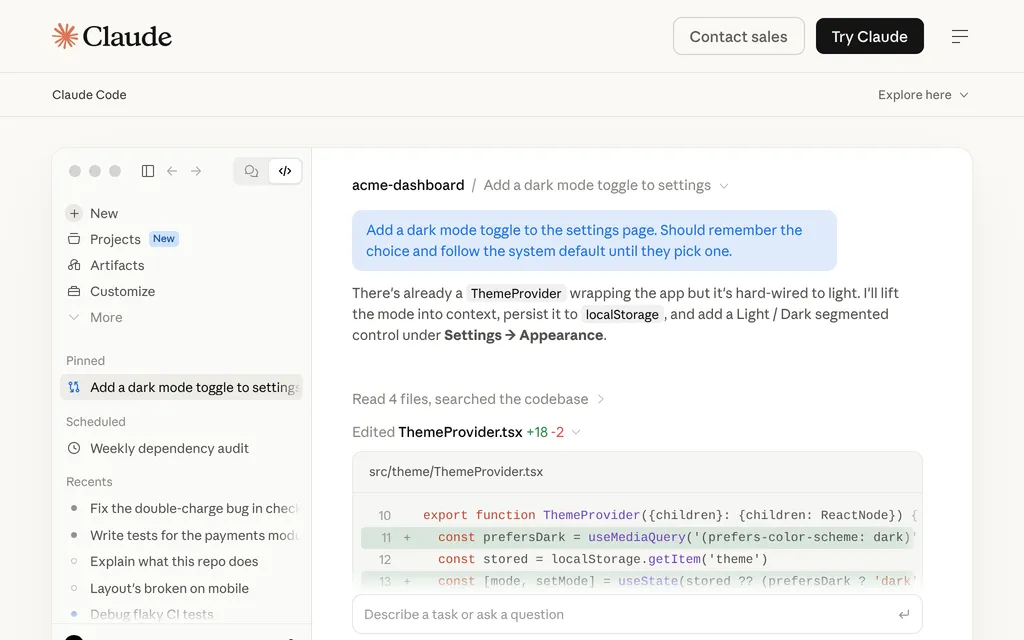
Anthropic's coding agent for terminal, IDE, desktop and web, from $20 a month
Kiro
Spec-driven AI IDE and CLI from AWS; 50 free credits, plans from $20 a month
FreemiumAI Coding
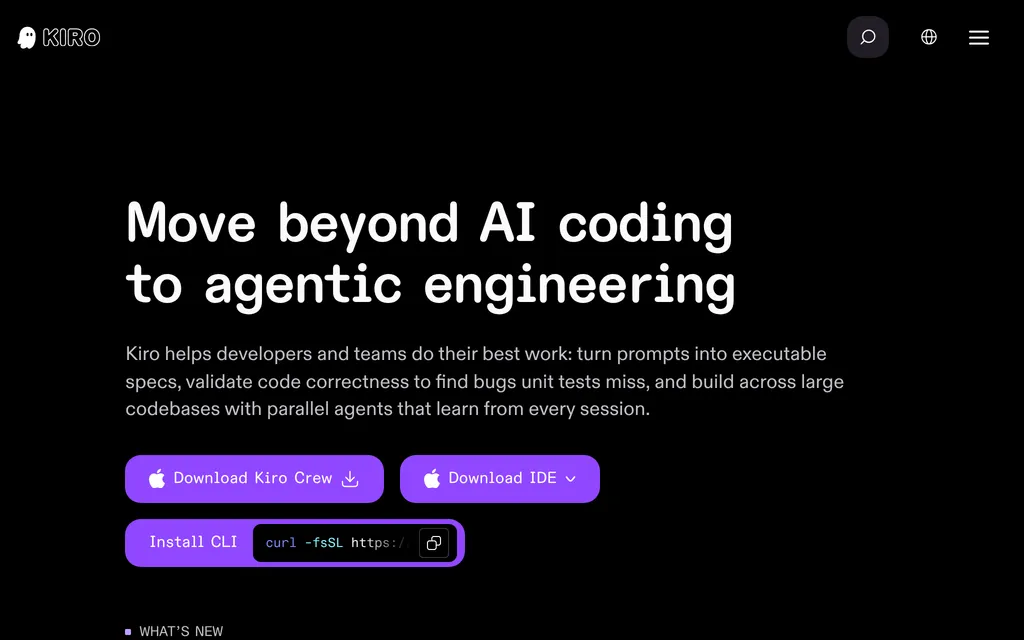
kiro.devExplore the product
AT A GLANCE
Details about Kiro
Short verdict: Kiro is AWS's agentic coding product: a Code OSS-based IDE, a terminal CLI, a web app for cloud sessions, an iOS app in preview and the open-source Kiro Crew, all on one agent harness. Its idea is spec-driven development: Kiro turns a prompt into requirements, a design and a task list you can review, checks the requirements for gaps, and can test the code against them with property-based tests. Pricing is credit-based with no daily or weekly rate limits, from 50 free credits a month to $200 for 10,000, but a task costs 2x to 6x more credits on top Claude and GPT models than on Kiro's Auto router. Kiro uses content from free and individual paid accounts to improve the service, including model training, unless you opt out. It suits teams that want written plans before code and AWS-backed admin controls; developers who want their own API keys or local models should look elsewhere.
How we reviewed it: We did not sign up for Kiro or run it against a model. On 21 October 2026 we read Kiro's pricing page and FAQ, its docs on models, specs, hooks, steering, the CLI, Kiro Web and data protection, the changelog, download page and blog, and the Kiro and Kiro Crew repositories on GitHub. Plans and limits change often; check the pricing page before you pay.
What Kiro costs and includes
| Item | Kiro on 21 October 2026 |
|---|---|
| Type | AI code editor (Kiro IDE, based on Code OSS) with a terminal agent (Kiro CLI), cloud sessions (Kiro Web), an iOS app in preview and Kiro Crew, an open-source agent workspace. Built and operated by AWS; preview from July 2025, generally available since November 2025 |
| Where it runs | IDE 1.4.13 on macOS (Apple Silicon, Intel), Windows (x64, ARM64) and Linux (x64, ARM64); CLI on macOS, Linux and Windows; Kiro Web in the browser; the agent also runs in editors that support the Agent Client Protocol. No AWS account needed: sign in with GitHub, Google, AWS Builder ID or IAM Identity Center |
| Models | Auto (Kiro's router), Claude Opus 5.5, Sonnet 5.5, Opus 5, Sonnet 5 and older Claude models, GPT-5.6 Sol, Terra and Luna, Kimi K3, DeepSeek 3.2, MiniMax M2.5, GLM-5 and Qwen3 Coder Next, all through Amazon Bedrock. No bring-your-own-key |
| Free tier | Kiro Free, $0: 50 credits a month, Auto, Claude Sonnet 4.5 and open-weight models, with rate limits |
| Paid plans | Per user a month: Pro $20 (1,000 credits), Pro+ $40 (2,000), Pro Max $100 (5,000), Power $200 (10,000). Extra credits $0.04 each. Enterprise: contact sales. Kiro pricing |
| How usage is limited | Monthly credits; a credit is a unit of agent work, metered to 0.01. Models cost from 0.05x (Qwen3 Coder Next) to 6x (Claude Fable 5.1) the credits of Auto. No daily or weekly rate limits, per Kiro |
| Open source | The IDE, CLI and Web are proprietary; the Kiro GitHub repository is an issue tracker. Kiro Crew is Apache-2.0 (4.5k stars, v0.9.0 on 16 October 2026) |
| Data use | Free and individual paid accounts: content may be used for service improvement, including model training, unless you opt out. Enterprise sign-in: never used |
| Latest notable release | Memory across chat sessions in Kiro IDE 1.4 and the CLI, 19 and 20 October 2026 |
What spec-driven development adds
Specs as three files you can review
A spec turns an idea into requirements.md (user stories and acceptance criteria) or bugfix.md, design.md (architecture and sequence diagrams) and tasks.md (a sequenced implementation plan) under .kiro/specs/. Kiro then works through the tasks, in parallel where it can, and an Analyze Requirements step looks for contradictions and gaps before any code is written.
Property-based tests for correctness
In the IDE, Kiro can turn requirements into properties that must hold for any input and test them across generated inputs, closer to fuzz testing than to a few example unit tests. Kiro pitches this as the way to catch code that passes its unit tests but does not match the spec.
Hooks, steering and Powers
Hooks are JSON files in .kiro/hooks/ that run a shell command or an agent prompt when an event fires, such as a saved file or a tool call, for example running ESLint after every TypeScript edit. Steering files in .kiro/steering/, or ~/.kiro/steering/ for all projects, hold your conventions, and Kiro also reads AGENTS.md. Powers bundle context and tools for a service; Kiro lists more than 100 curated ones from partners such as Figma, Stripe, Supabase and Netlify.
Cloud sessions and Kiro Crew
Kiro Web, on paid plans, runs sessions in isolated cloud sandboxes, including an autonomous mode and cron automations that open pull requests on GitHub or GitLab; Kiro never merges them itself. Kiro Crew, open source since 4 August 2026, keeps a crew of agents working on schedules with memory across sessions, reachable from a desktop app, a web dashboard, a terminal UI or chat apps such as Slack.
Credits, defaults and deadlines to watch
Model choice multiplies the bill. By Kiro's multipliers, a task that costs 10 credits on Auto costs about 13 on Claude Sonnet 5.5, 20 on Claude Opus 5.5 and 44 on GPT-5.6 Sol, and GPT-5.6 requests over 272K tokens bill at double that.
Credits reset monthly. Unused plan credits don't roll over. Individuals prepay extra credits in packs from $5 that last 12 months, and the Free plan cannot buy them; enterprise overage is off unless an admin enables it.
Training is opt-out for individuals. Content collection is on by default for Free and individual paid accounts and can be switched off in settings; Free-tier inputs may still be kept for up to 60 days for abuse detection. Enterprise users are opted out automatically.
No outside harnesses. There is no bring-your-own-key, and using a Kiro subscription through tools such as OpenClaw is not permitted.
Forced upgrades. IDE versions before 0.11.133 and CLI versions before 1.28.2 stop connecting on 9 November 2026, and IDE versions up to 0.12.291 and CLI up to 2.5.0 on 15 January 2027.
Pros and cons
Pros
Specs leave requirements, design and tasks in your repository before code is written.
Property-based tests check code against the spec, not just a few examples.
Credits with no daily or weekly rate limits, and cheap open-weight models from 0.05x Auto's cost.
Hooks, steering files, Powers and an Apache-2.0 Kiro Crew for scheduled agents.
Cons
The free plan has 50 credits a month and older Claude Sonnet 4.5.
Premium models burn credits 2x to 6x faster than Auto.
Individual accounts' content is used for service improvement unless you opt out.
No bring-your-own-key or local models, and the IDE, CLI and Web are closed source.
How Kiro compares
Cursor runs cloud agents on their own machines and a Projects coordinator for long jobs. Its plans, $8 to $200 a month in The X Subscription, include a weekly pool of Grok and Composer usage, while Claude, GPT and Gemini are billed at API list price on Premium ($30) and up. Choose it for parallel cloud agents and pull-request review.
Google Antigravity has a free plan with a weekly agent quota and unlimited Tab completions, and Google AI Pro at $19.99 a month adds Gemini 4 Argon and Claude 5.5 with quotas that refresh every 5 hours. Choose it to start free on Gemini models.
GitHub Copilot plugs into editors you already use, from VS Code and JetBrains IDEs to Xcode and Zed. Pro costs $10 a month for 1,500 AI credits with unlimited completions, and its cloud agent turns an issue into a pull request. Choose it for agent help without switching editors.
For more options, see all AI coding tools.
Who should use Kiro
Use Kiro if you want an agent that writes down requirements, a design and a task list before it codes, if your team already works with AWS sign-in and billing, or if you want predictable monthly credits without 5-hour or weekly windows. Look elsewhere if you want to bring your own API keys or local models, if you mostly use the priciest models, where credits run out fast, or if you need a no-training default without moving to Kiro's enterprise sign-in.
FAQ
Is Kiro free?
Yes. As of 21 October 2026 Kiro Free gives 50 credits a month with Kiro's Auto router, Claude Sonnet 4.5 and open-weight models such as Qwen3 Coder Next, subject to rate limits. The free plan cannot buy extra credits, and it is not available for enterprise sign-in or AWS GovCloud.
How much does Kiro cost?
As of 21 October 2026, per user a month: Pro $20 for 1,000 credits, Pro+ $40 for 2,000, Pro Max $100 for 5,000 and Power $200 for 10,000. Extra credits cost $0.04 each, prices exclude tax, AWS GovCloud costs about 20% more, and Enterprise is priced by AWS sales.
Does Kiro use my code to train models?
It can, unless you opt out. Kiro says it may use content from Free accounts and from paid accounts that sign in with GitHub, Google or AWS Builder ID for service improvement, including model training; you can turn off content collection in Kiro's settings. Content from enterprise accounts that sign in through IAM Identity Center or an external identity provider is not used.
Do I need an AWS account to use Kiro?
No. Kiro says you do not need an AWS account: you can sign in with GitHub, Google or AWS Builder ID, and enterprises sign in through AWS IAM Identity Center or an external identity provider such as Okta or Microsoft Entra ID.
KEEP EXPLORING
More AI coding tools Good company for Kiro.
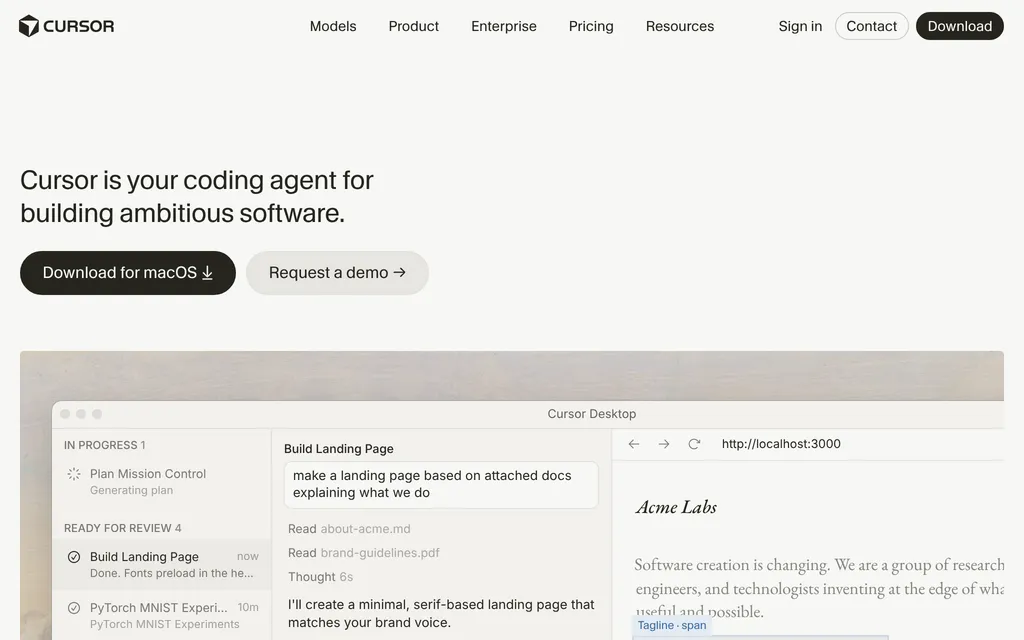
AI code editor with parallel cloud agents, sold in The X Subscription from $8
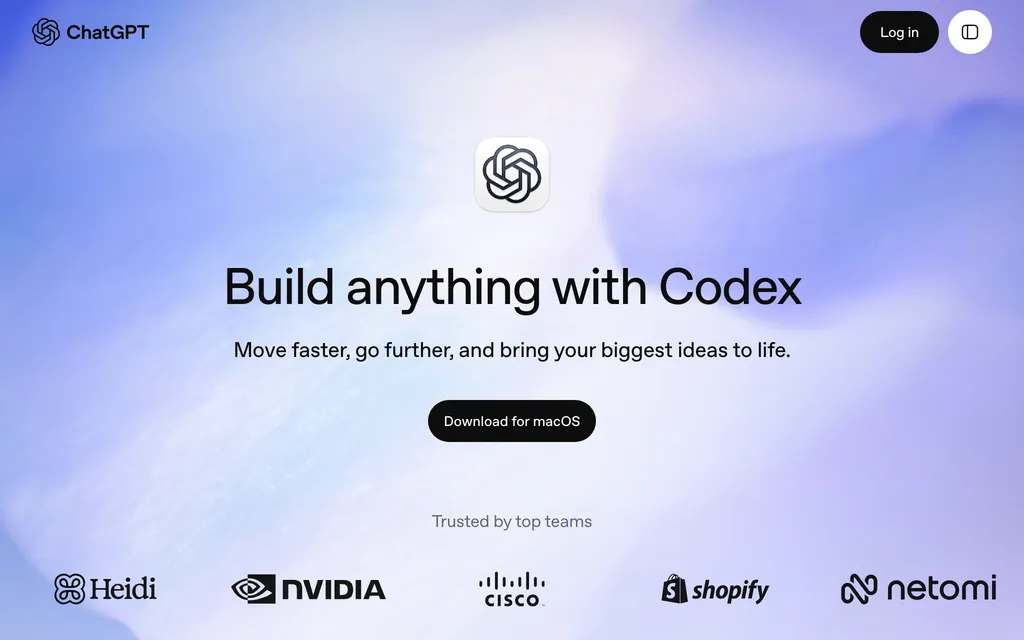
OpenAI's coding agent for CLI, IDE, ChatGPT app and cloud, from $20 a month