
Anthropic's coding agent for terminal, IDE, desktop and web, from $20 a month
Google Antigravity
Google's agent-first app, CLI and IDE; free tier, more quota from $19.99
FreemiumAI Coding
antigravity.googleExplore the product
AT A GLANCE
- Website
- antigravity.google
- Pricing
- Freemium
- Categories
- AI Coding
- Listed
- Sep 2026
- Updated
- Oct 2026
Details about Google Antigravity
Short verdict: Google Antigravity is Google's agent platform for software work: a desktop app that runs several agents in parallel, a terminal CLI (agy), the Antigravity IDE, extensions for five other editors and a Python SDK, all on one agent harness. Its agents report through plans, screenshots and browser recordings you can comment on, and its CLI is where Google now sends Gemini CLI users. The individual plan is free with a weekly quota, and Google AI Pro ($19.99 a month) or Ultra ($99.99 or $199.99) buys more. The catches: no bring-your-own-key, Google uses your interactions to improve its products unless you opt out, and, per Google, the free tier loses Claude Sonnet 4.6, Claude Opus 4.6 and GPT-OSS 120B on 2 November 2026. It suits developers happy with Gemini models and Google's consumer terms; if you need your own keys or a no-training default, look elsewhere or use Gemini Enterprise.
How we reviewed it: We did not sign up for Antigravity or run it against a model. On 21 October 2026 we read Antigravity's pricing page, its plans, models, subagent and enterprise docs, the FAQ, download page, changelog and blog, the Antigravity terms, Google's Google AI plan pages and the CLI and SDK repositories on GitHub. Plans and limits change often; check the pricing page before you pay.
What Antigravity costs and includes
| Item | Google Antigravity on 21 October 2026 |
|---|---|
| Type | Desktop agent app (Antigravity App), terminal agent (Antigravity CLI, agy), AI code editor (Antigravity IDE), IDE extensions and a Python SDK. Made by Google; public preview from 18 November 2025, version 2.0 on 19 May 2026 |
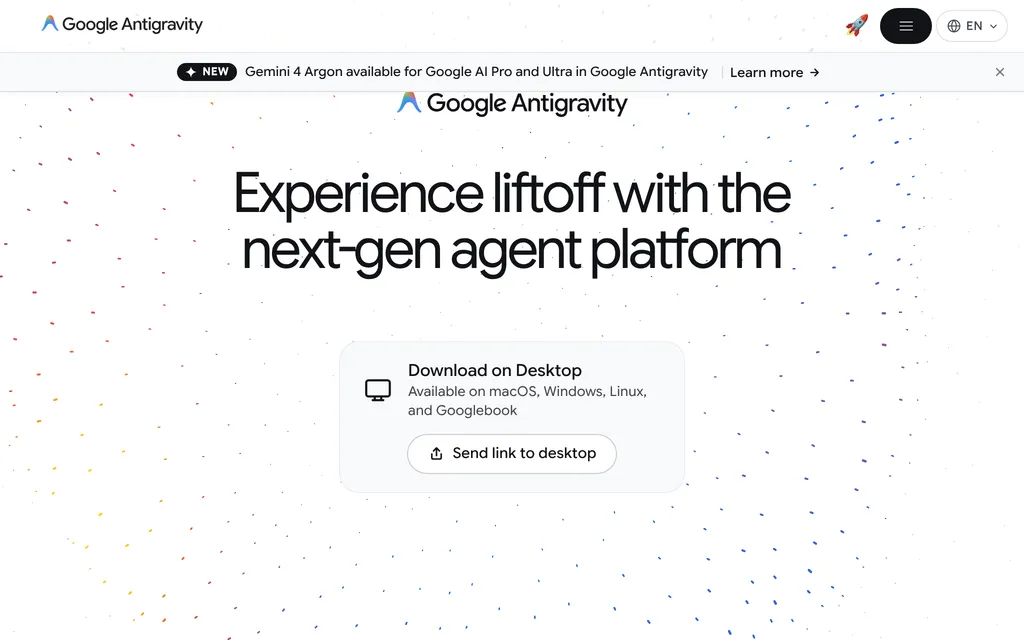
| Where it runs | App on macOS 12 or later, Windows 10 and 11 (x64, ARM64), Linux (x64, ARM64) and Googlebook; CLI on macOS, Linux and Windows; extensions for VS Code, Visual Studio 2026, JetBrains IDEs, Zed and Xcode; Remote Control from any browser |
| Models | Free and Google AI Plus: Gemini 3.8 Flash, plus Claude Sonnet 4.6, Claude Opus 4.6 and GPT-OSS 120B until 2 November 2026, per Google. Paid Google AI Pro adds Gemini 4 Argon, Claude Sonnet 5.5 and Claude Opus 5.5. No bring-your-own-key |
| Free tier | $0: unlimited Tab completions and Command requests, agent use within a weekly quota |
| Paid plans | Google AI Pro $19.99 a month; Google AI Ultra $99.99 (5x Pro's quota) or $199.99 (20x), per Google. Businesses: Gemini Enterprise Standard or Plus from $30 per seat a month, or pay-as-you-go. Antigravity pricing |
| How usage is limited | Free: a quota refreshed weekly. Pro and Ultra: a quota refreshed every 5 hours until a weekly limit. Pro and Ultra can buy AI credits for overage at Gemini Enterprise consumption prices |
| Open source | App, IDE and CLI are proprietary; the Python SDK is Apache-2.0 (3.8k GitHub stars) |
| Data use | Google records your interactions and uses them to improve Google and Alphabet products and machine learning, unless you opt out in settings. Gemini Enterprise accounts run under Google Cloud terms |
| Latest notable release | Gemini 4 Argon for Google AI Pro and Ultra in the App and CLI, 13 October 2026; CLI 1.4.4, 21 October 2026 |
What Antigravity does differently
One agent across five surfaces
The App groups conversations into Projects that can span several folders, and each agent works in your folders or in a new Git worktree. The CLI runs the same harness and settings, and terminal conversations can be opened in the App; the extensions put the agent in VS Code, Visual Studio, JetBrains IDEs, Zed and Xcode, and the Python SDK builds custom agents on the same harness, including offline ones with Gemma 4.
Artifacts instead of raw tool calls
Agents report through artifacts: task lists, implementation plans, walkthroughs, screenshots and browser recordings. You can comment on a plan or a screenshot to correct the agent before it continues, and the /browser command has it test your app in a sandboxed Chromium browser.
Subagents, schedules and remote control
The main agent can start subagents (built-in research, browser and self, or your own defined in Markdown) that work in parallel in the same workspace or in isolated worktrees, and /teamwork-preview runs multi-agent swarms. /goal runs a task to completion without stopping for input, and /schedule sets one-off or cron tasks. Hooks, skills, MCP servers and a plugin marketplace extend it, and Remote Control lets you drive App and CLI sessions from any browser, including a phone.
Where Google sends Gemini CLI users
On 19 May 2026 Google announced that Gemini CLI would stop serving free Google sign-in users and Google AI Pro and Ultra subscribers on 18 June 2026, and pointed them to Antigravity CLI, which Google says took inspiration from Gemini CLI's product and harness. Google's guides cover moving skills and MCP servers across, and Google says Gemini CLI has not been optimized for Gemini 4 Argon.
Quotas, models and terms to check
Quotas measure work, not prompts. Google says limits track how much work the agent does, depend on available capacity and are "subject to modification".
The free model list is shrinking. Per Google, Claude Sonnet 4.6, Claude Opus 4.6 and GPT-OSS 120B leave on 2 November 2026, which leaves free users on Gemini 3.8 Flash. Gemini 4 Argon and Claude 5.5 need a paid, non-trial Google AI Pro or Ultra plan, and Argon is not available in the Antigravity IDE.
No own keys, no third-party tools. There is no bring-your-own-key or custom endpoint. Using an Antigravity login from tools such as OpenClaw, OpenCode or Claude Code breaks Google's terms and can get the account suspended.
Training is opt-out. The terms say Google employees and contractors may review your interactions; you can switch this off in settings or email Google to delete them.
Personal accounts only. Individual use needs a personal Google Account, an age of 18 or over and a supported country.
A fast-moving product. Version 2.0 moved agent management into a separate app six months after launch, and Google has said it plans to remove the Agent Manager from the IDE.
Pros and cons
Pros
A free plan with unlimited Tab completions and a weekly agent quota.
The same agent in a desktop app, a CLI, an IDE, five editor extensions and an SDK.
Plans, screenshots and browser recordings you can comment on while the agent works.
Google AI Ultra at $99.99 or $199.99 gives 5x or 20x the Pro quota, per Google.
Cons
No bring-your-own-key, and limits depend on Google's capacity.
Interactions are used to improve Google products, with human review, unless you opt out.
Free users keep only Gemini 3.8 Flash after 2 November 2026.
Consumer access is limited to personal accounts, adults and supported countries.
How Antigravity compares
OpenAI Codex comes with ChatGPT plans: Free gets GPT-6 Luna in the desktop app (subject to rollout), and Plus at $20 a month gets full Codex with 5-hour limits. Unlike Antigravity, its CLI is open source (Apache-2.0) and accepts your own API key or local models. Choose it if you want an open CLI or your own keys.
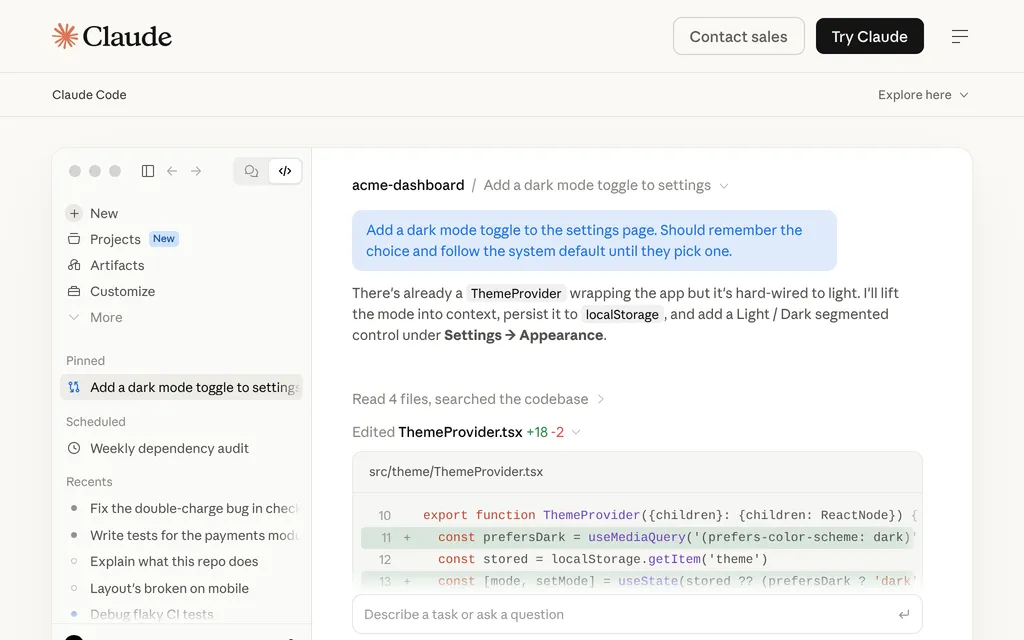
Claude Code has no free tier: Pro costs $20 a month for Claude models, with Opus 5.5 by default and 5-hour and weekly limits shared with Claude chat. Choose it if Claude is the model you want every day.
Kiro, AWS's agentic IDE, gives 50 free credits a month and sells monthly credits from $20 with no daily or weekly windows, and it writes requirements, a design and tasks before coding. Choose it for spec files and a predictable monthly allowance.
For more options, see all AI coding tools.
Who should use Antigravity
Use Antigravity if you want a free way to run Gemini agents from a desktop app or a terminal, if you came from Gemini CLI, or if you already pay for Google AI Pro or Ultra. Look elsewhere if you need your own API keys, don't want your code used to improve a vendor's products, or work from a Google Workspace account; companies can get Google Cloud terms through Gemini Enterprise.
FAQ
Is Google Antigravity free?
Yes. As of 21 October 2026 the individual plan costs $0 and includes unlimited Tab completions and Command requests plus agent use within a weekly quota. Free users get Gemini 3.8 Flash; Google says Claude Sonnet 4.6, Claude Opus 4.6 and GPT-OSS 120B leave the free tier on 2 November 2026.
How much does Antigravity cost with a Google AI plan?
Google AI Pro costs $19.99 a month and adds Gemini 4 Argon, Claude Sonnet 5.5 and Claude Opus 5.5 with a quota that refreshes every 5 hours until a weekly limit. Google AI Ultra costs $99.99 (5x Pro's quota) or $199.99 (20x). Prices are US prices as of 21 October 2026; businesses use Gemini Enterprise from $30 per seat a month.
Does Google Antigravity use my code to improve Google's models?
By default, yes. Google's Antigravity terms say it records your interactions and uses them to improve Google and Alphabet products and machine learning, and that employees and contractors may review them. You can opt out in settings; Gemini Enterprise accounts run under Google Cloud terms instead.
Is Antigravity CLI the replacement for Gemini CLI?
For individual users, yes. Google stopped serving free Google sign-in users and Google AI Pro and Ultra subscribers in Gemini CLI on 18 June 2026 and points them to Antigravity CLI, which runs the same agent as the Antigravity App and supports Gemini 4 Argon on Pro and Ultra.
KEEP EXPLORING
More AI coding tools Good company for Google Antigravity.
AI code editor with parallel cloud agents, sold in The X Subscription from $8
OpenAI's coding agent for CLI, IDE, ChatGPT app and cloud, from $20 a month