
Indie Kit
AI-ready Next.js SaaS starter kit overview
TL;DR
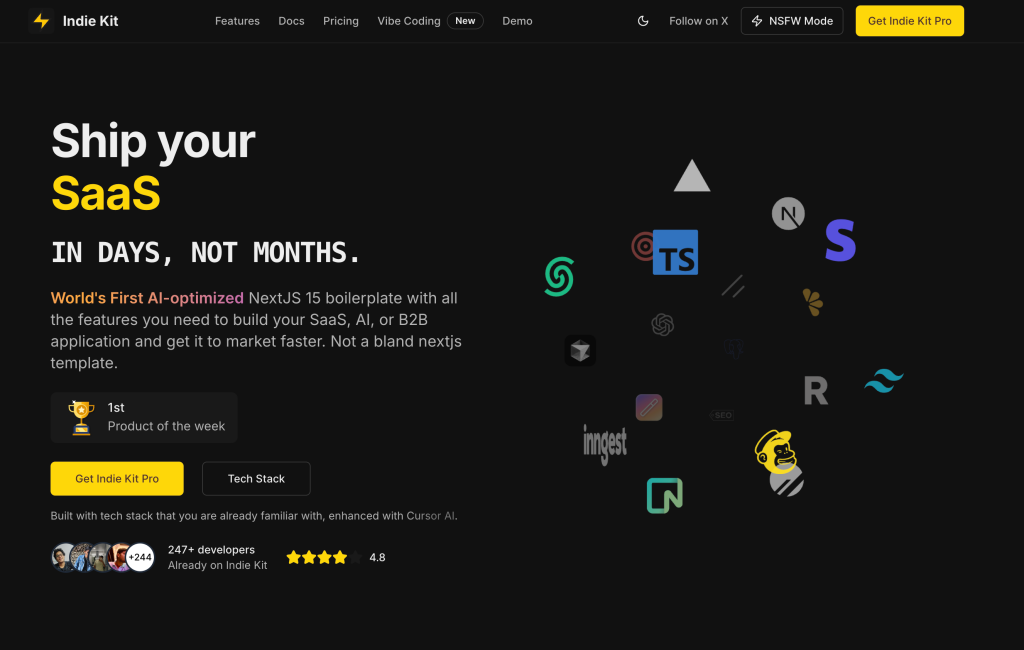
Indie Kit is a Next.js 16 starter kit built to help you launch SaaS/B2B apps faster, with core stuff like auth, payments, email flows, SEO, and more already wired up.
Its big angle is AI-first dev: built-in rules/skills meant to work well with AI editors (like Cursor/Windsurf) so you spend less time fighting the codebase.
The public changelog shows frequent updates, including payments (ex: Paddle) and security fixes.
Key stats + definitions
Framework: Next.js 16 (App Router)
Positioning: AI-optimized boilerplate/starter for SaaS, AI apps, and B2B
Starting price shown in listings: from $79
Definition: A boilerplate/starter kit is a pre-built project foundation (auth, billing, emails, etc.) so you can build your product features immediately.
What Is the Indie Kit?
Indie Kit is a production-minded Next.js starter kit that bundles common SaaS building blocks so you can go from idea to launch faster. It’s aimed at founders and developers who don’t want to keep rebuilding auth, billing, email, and SEO from scratch.
It also markets itself as AI-optimized, with rules/skills intended to help AI coding tools generate changes that fit the project structure.
Features ✨
In plain terms: it’s “all the boring but necessary parts” already done.
AI editor support (rules/skills for faster changes in tools like Cursor/Windsurf)
Authentication (social login, magic links, role-based access, user management)
Payments with multiple providers supported/mentioned across resources (ex: Stripe, Lemon Squeezy, PayPal, Paddle, DodoPayments)
Email templates + onboarding sequences (with integrations referenced like Resend/SES/Mailgun/Mailchimp)
SEO basics baked in (starter positioning highlights SEO as a built-in area)
Multi-tenant/B2B support (notably called out for org/team-style SaaS)
What components are included? 📒
You’re basically getting a “starter stack” plus common SaaS screens/flows.
Next.js 16 App Router setup
UI setup (Tailwind + shadcn/ui mentioned as part of the stack)
Auth flows + protected routes + admin/user management
Billing flows + webhooks + plan/upgrade logic (supported via the multi-provider payments focus)
Email templates (marketing/transactional style templates + onboarding sequences)
A large component set (site messaging calls out “600+ components included”)
What are the pros and cons of Indie Kit?
Here’s the simple tradeoff: you move faster, but you adopt someone else’s structure.
Pros ✅
Big time-saver: lots of SaaS plumbing is already there
AI-first workflow is a real differentiator if you use Cursor/Windsurf-style editing
Multi-payment + multi-tenant options are clearly a focus
Public changelog + regular updates help with “is this maintained?” confidence
Cons ⚠️
Starters can feel “big” if you only need a tiny app (more stuff to learn/remove)
You’re committing to the kit’s patterns (best when you build with it, not against it)
Payment/provider breadth is great, but you still have to configure keys, webhooks, plans, and edge cases for your product
What does Indie Kit integrate with? (in bullet points)
AI dev tools: Cursor, Windsurf
Payments: Stripe, Lemon Squeezy, PayPal, Paddle, DodoPayments
Email providers/tools: Resend, Amazon SES, Mailgun, Mailchimp
Databases/platforms mentioned: PostgreSQL + common modern DB options listed in ecosystem pages
Deploy: Vercel is shown as part of the stack positioning
FAQ
Does Indie Kit work for B2B SaaS with teams?
Yes, multi-tenant/team-style SaaS is a stated focus.
Can I take payments beyond Stripe?
Yes. Support is shown/mentioned for multiple providers (including PayPal and Paddle in updates)
Is Indie Kit the same as the open-source “Indiekit” Node server?
No. “Indiekit” also refers to a separate Node.js publishing server project; your URLs here are for the Next.js starter kit at indiekit.pro.