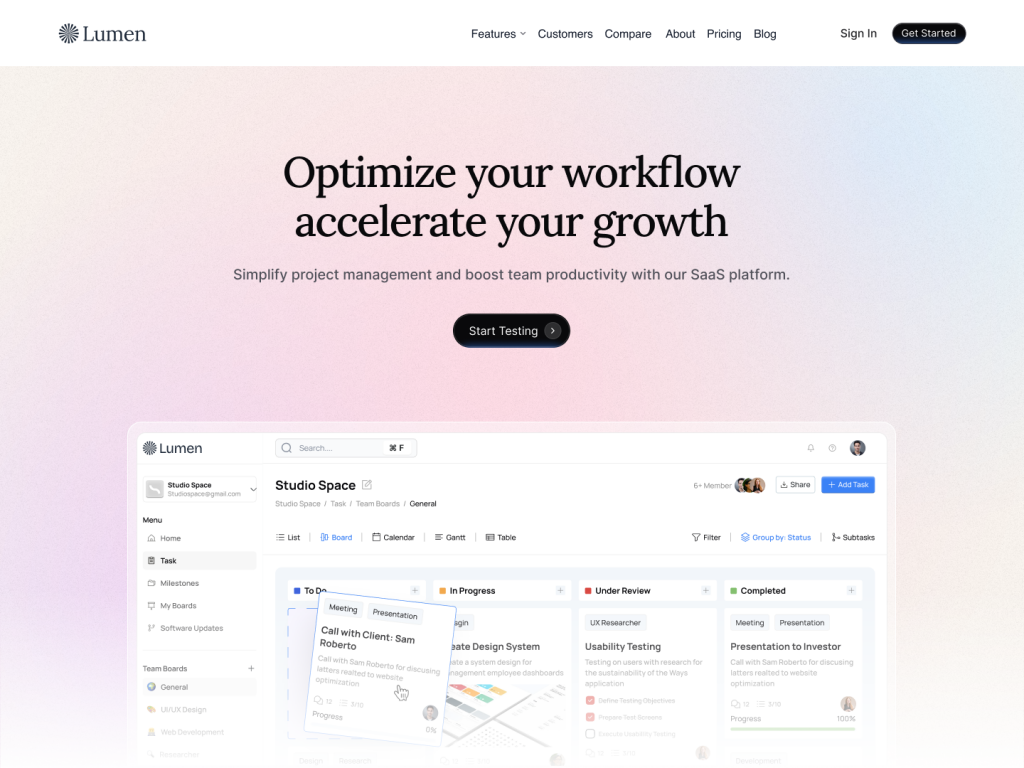
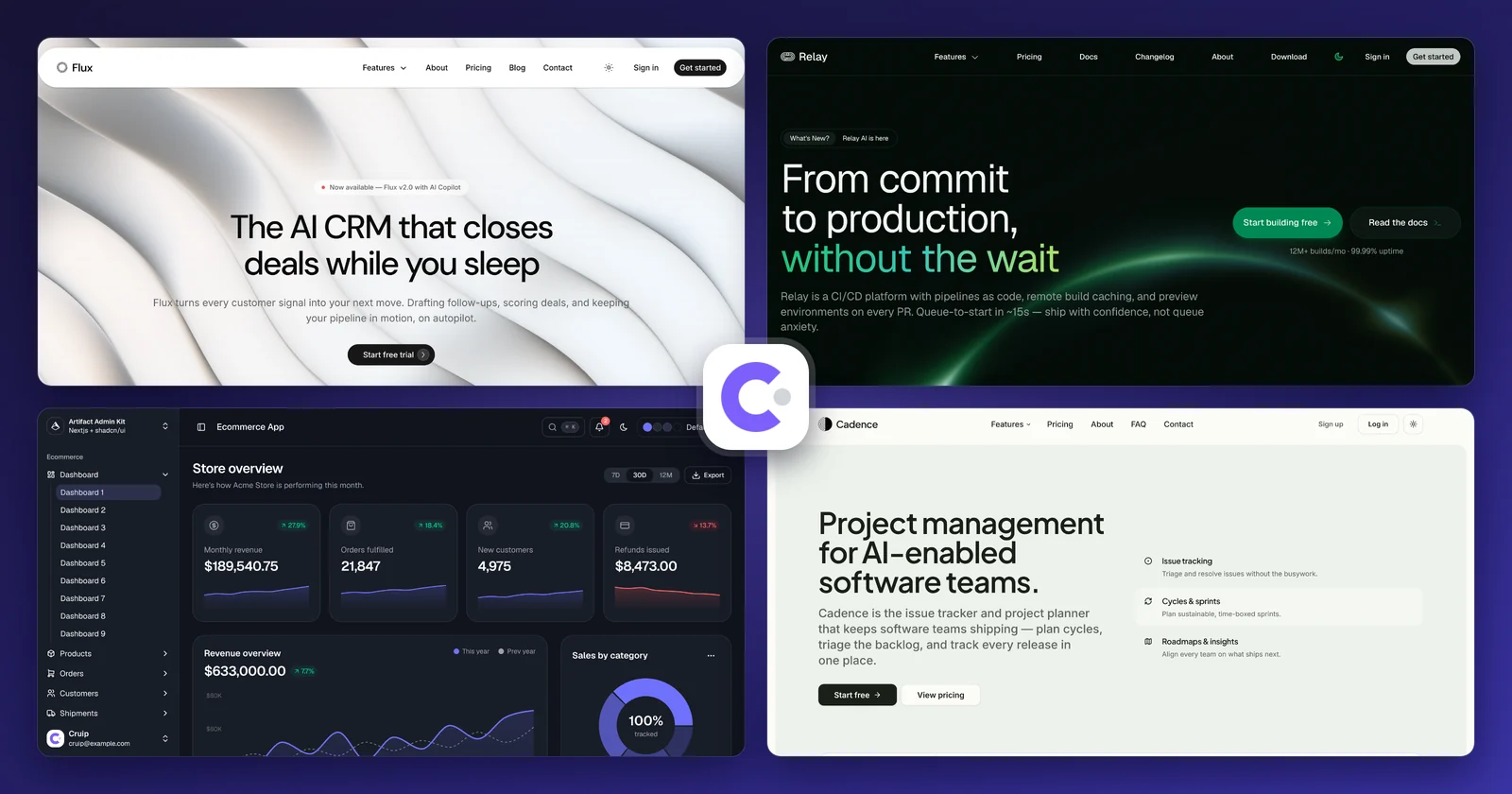
Flux, Cadence, Relay and Artifact: Tailwind templates for Next.js and Astro
Grow
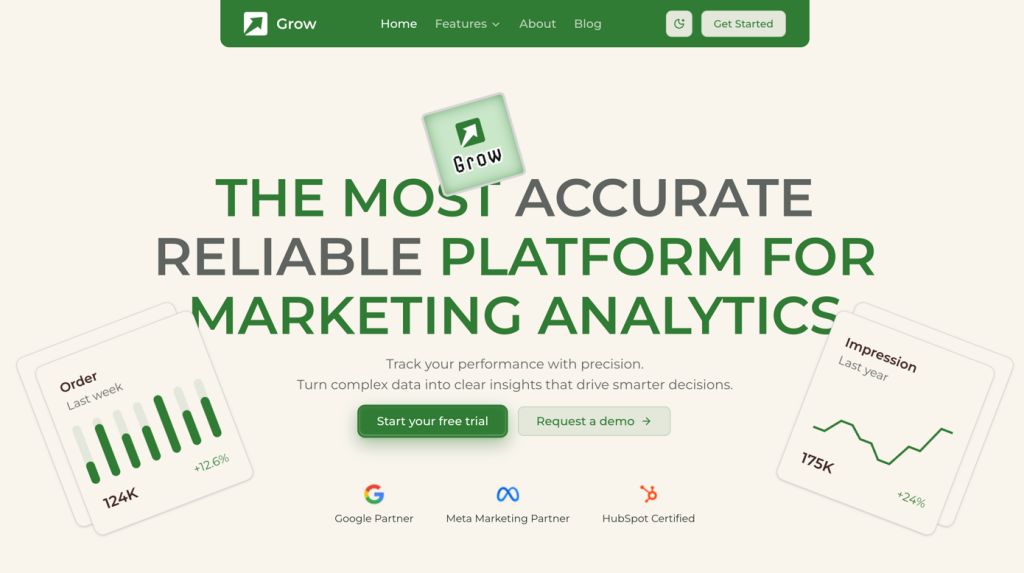
Next.js and Astro analytics landing page with tabbed dashboard previews
PaidTemplates
shadcnstudio.comExplore the product
AT A GLANCE
- Website
- shadcnstudio.com
- Pricing
- Paid
- Categories
- Templates
- Listed
- Mar 2026
- Updated
- Nov 2026
Details about Grow
KEY POINTS
- Tailwind CSS v4
- MDX support
- Figma file
Short verdict: Grow is a polished landing page for a marketing analytics product, in Next.js and Astro, with light and dark modes, a monthly and yearly pricing toggle and a dashboard preview built from real chart components in four tabs. It is one page deep: each demo has 9 URLs (the home page, an about page and a blog with six posts), no pricing, contact or legal pages, and 19 links and three buy buttons that lead nowhere. The sample proof needs work before launch, with testimonials credited to the CEOs of Lemon Squeezy, Gumroad, Zipline and Zendesk and partner badges for Google, Meta and HubSpot. It is also slow on phones: the Next.js home page scored 47. It suits a SaaS team that wants one shadcn/ui launch page; it is the wrong buy if you need a full marketing site.
How we reviewed it: On 22 November 2026 we used both live demos, Next.js and Astro, on a desktop and on a 390 px phone screen. We crawled all 9 URLs of each, switched the dashboard tabs, the pricing toggle and the theme, and logged network requests. We ran Lighthouse 12.8.2 on both home pages and on a blog post; mobile scores are the median of three runs because our test machine was shared, desktop scores are one run. We did not buy Grow, so we could not check the source code, the contents of the download or the Figma file. Prices, plans and license terms come from shadcn/studio's product, pricing, checkout and license pages on the same day.
Disclosure: our links to shadcn/studio carry a referral tag (ref=tailkits), so Tailkits may earn a commission if you buy through them. Tailkits is not sponsored by shadcn/studio.
What you get for $59
| Price | $59 one-time for Grow alone, through a Polar checkout. Or shadcn/studio Pro at $249 one-time (listed as down from $359), which includes all its templates, 1,100+ blocks and the Figma kit. The $149 Basic plan covers free templates only. Plans |
|---|---|
| Editions | Next.js and Astro, per shadcn/studio. The demos run Next.js 16.2.7 and Astro 6.4.3. |
| Version | Created 5 December 2025, last updated 5 June 2026, per shadcn/studio. |
| Size | 9 URLs in each demo: a 13-section home page, an about page, a blog index and six MDX posts. |
| Stack | shadcn/ui, React, TypeScript, Tailwind CSS v4 (read from the demos' CSS) and Lucide icons; the demos' JavaScript also includes Motion and Recharts. |
| Figma file | Included with Pro, Team and Enterprise. The FAQ says design files come only with those plans, and the $59 checkout does not list one. |
| License | One person, unlimited end products including client sites; no reselling the template. The license page does not cover the $59 single-template purchase. License terms |
What we found in the demos
One long page and little else
The home page stacks 13 sections: hero, data overview, dashboard preview, features, about, comparison, social proof, process, pricing, testimonials, case studies, FAQ and a closing call to action. Beyond it there is an about page and a blog with six posts, and that is all: no pricing, contact, sign-up or legal pages. Fifteen footer links and four Request a demo buttons point to "#", and the three Purchase Now buttons in the pricing section are not links. The pricing toggle itself works: Free at $0, Growth at $99 a month or $949 a year with "20% off", and a custom Enterprise plan. On a 390 px screen nothing scrolls sideways, the menu opens, and the light or dark choice is saved in the browser under the key theme.
A dashboard preview made of real components
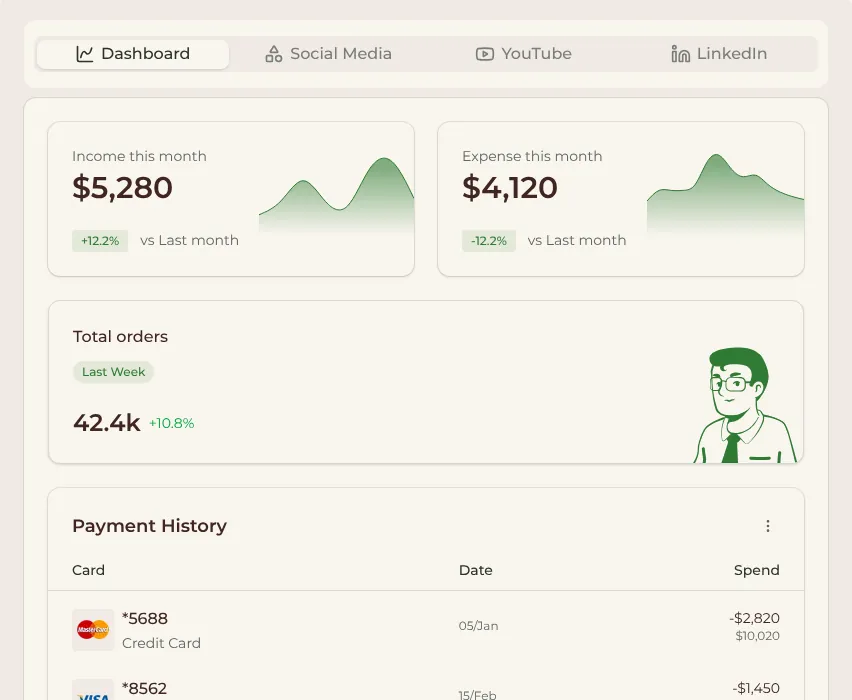
The section that sets Grow apart is a dashboard preview with four tabs: Dashboard, Social Media, YouTube and LinkedIn. Each swaps in a different set of widgets, such as income and expense cards with area charts, a payment history table, sales by country and weekly transactions. They are rendered components rather than screenshots, so you can feed them your own data. The content does not always match the tab: YouTube shows sales by country and LinkedIn shows service price cards.
Copy that mixes a SaaS and an agency
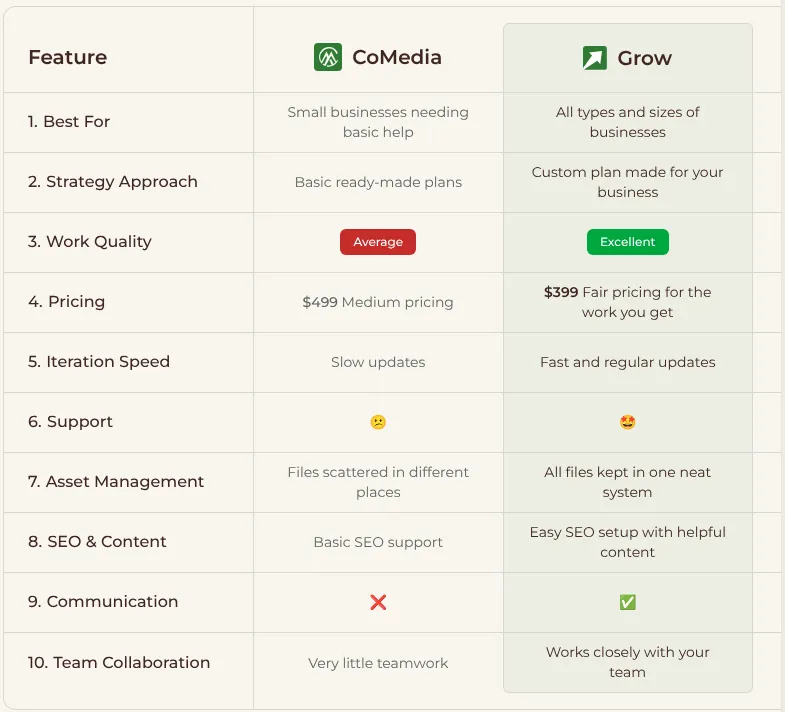
The pricing plans sell software, but other sections sell services. The comparison table rates Grow against CoMedia and Hive-Studio on what an agency sells: a custom strategy plan, work quality, iteration speed and a $399 price, with emoji for support. The meta description calls Grow "a full-service marketing agency", and the social proof block opens with "In construction, success stems from collaboration". Pick one story and rewrite the rest.
Sample proof to replace before launch
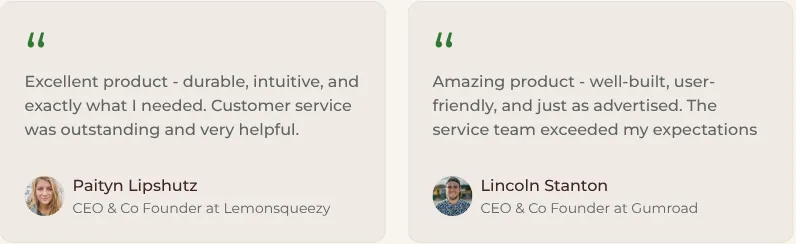
The testimonials are credited to the CEOs and co-founders of real companies: Lemon Squeezy, Gumroad, Zipline and Zendesk. One card shows the address [email protected] as a job title. The hero shows Google Partner, Meta Marketing Partner and HubSpot Certified badges, and the stats claim 40K customers. Publishing any of these unchanged would make claims your company cannot back.
Next.js or Astro
Both editions have the same pages, sections and behavior. The Astro edition is lighter, 782 KB against 1,187 KB on our mobile runs, but it is not a static Astro page: all 15 sections, the footer included, are React islands that hydrate on load, so it still ships 419 KB of JavaScript against 434 KB for Next.js. The Astro edition also has an RSS feed and per-page canonical and social URLs, while the Next.js home page has no canonical link and every Next.js page gives the home page as its og:url.
Performance and SEO
Lighthouse 12.8.2, 22 November 2026; mobile rows are the median of three runs, desktop rows one run:
| Page | Performance | Accessibility | Best practices | SEO |
|---|---|---|---|---|
| Home, Next.js, mobile | 47 | 97 | 96 | 66 |
| Home, Next.js, desktop | 80 | 94 | 100 | 66 |
| Home, Astro, mobile | 70 | 97 | 96 | 69 |
| Home, Astro, desktop | 88 | 94 | 100 | 69 |
| Blog post, Next.js, mobile | 74 | 100 | 100 | 69 |
Both demos block search engines (their robots.txt says it is generated for demo and staging deployments), which caps SEO at 66 to 69; check that your production build doesn't. The number to fix is mobile largest contentful paint: 8.0 s on Next.js and 5.6 s on Astro. The server HTML ships 103 elements at opacity 0, the hero heading and text among them, so they stay invisible until JavaScript has run the entrance animations. Both editions also load a 231 KB (uncompressed) Google Fonts stylesheet that declares 557 font faces in 44 families, from Creepster to Orbitron, while the page uses Montserrat, and the Next.js edition preloads 37 images.
Accessibility issues are small: one Request a demo button at 4.2:1 contrast, and on desktop, progress bars without names. Best practices lost points for three partner logos served at too low a resolution. Structured data is limited to WebSite on every page and WebPage and BreadcrumbList on posts, with no ratings or prices to clean up.
What you still have to build
Pages and links. Pricing, contact, sign-up and legal pages, and targets for the 19 "#" links and the Purchase Now buttons.
Proof and copy. Testimonials, partner badges, stats, the comparison table and the case studies.
Loading. Render the hero and the first screen visible without JavaScript, and cut the font stylesheet down to the fonts you use.
Indexing. Make sure your deployment does not copy the demo's robots.txt and noindex tag.
Setup. The shadcn/studio docs ask for Node.js 18.17 or later, but Astro 6.4.3 needs Node 22.12 and Next.js 16 needs 20.9, per their npm packages.
Pros and cons
Pros
A dashboard preview built from chart and table components, in four tabs.
Next.js and Astro editions, both with public demos to compare.
Light and dark modes that persist, and no sideways scrolling on phones.
A unique meta description on every page and breadcrumb structured data on posts.
Cons
Only 9 URLs, with no pricing, contact or legal pages, and 19 links to "#".
Mixed SaaS and agency copy, and testimonials naming real companies.
Slow on phones: 47 for the Next.js home page, with an 8.0 s LCP.
The Figma file comes with the $249 plan, not the $59 purchase, per shadcn/studio.
The docs list an outdated Node.js version.
How Grow compares
Metafi (Shadcnblocks, $79, with a 40% code offered on 22 November 2026) is a shadcn/ui marketing template for Next.js and Astro with 19 pages and 100+ components, per Shadcnblocks. Pick it if you need inner pages, not one landing page.
Flux (Cruip, $49) has 14+ pages, including pricing with a comparison table, contact, careers and sign-up, in HTML, Next.js, Vue and Astro editions. Pick it if you need a full site for less.
shadcn/studio Pro ($249 one-time) includes Grow, Orion and the other templates, with Figma files. It pays off from five templates, or as soon as you need the Figma file.
See all SaaS templates for more options.
Who should buy Grow
Buy it if you are launching a marketing analytics or reporting SaaS, want a single landing page with dashboard previews in shadcn/ui, and will write your own proof and build the pricing, contact and legal pages. Look elsewhere if you need a multi-page site, a fast mobile page without rework, or the Figma file at the $59 price.
FAQ
Can I buy Grow without a plan?
Yes. Grow sells for $59 one-time through a Polar checkout on its product page, even though the FAQ on the same page says templates are not sold separately. The Pro plan ($249 one-time) includes it with every other template.
Does Grow come with the Figma file?
Only with a plan, per shadcn/studio. Its FAQ says design files come with Pro, Team and Enterprise, and the $59 checkout does not list a Figma file.
Do I get both the Next.js and Astro versions?
Both are listed: shadcn/studio names Next.js and Astro editions for Grow, and its checkout lists Next.js and Astro v6. We tested both public demos but did not buy the download, so we could not confirm what it contains.
Can I use Grow for client projects?
Yes. The paid licenses allow unlimited end products, including sites built for clients, for one person; the Team plan covers 15 people. You can't resell or redistribute the template.
Get new templates like Grow weekly
Every Monday: the templates, components and tools added to Tailkits that week, each checked by an editor. Free, unsubscribe in one click.
17 new in the last 30 days313 products reviewed so farSee what you get
KEEP EXPLORING
More templates