
Cursor vs GitHub Copilot
Cursor is an AI code editor with a CLI and cloud agents; GitHub Copilot works inside the editor you already use, the terminal, a desktop app and github.com. Copilot is cheaper to start and has more models in the plan: Pro at $10 a month includes $15 of AI credits for Claude, GPT and Gemini models, though Opus and GPT-6.2 need Pro+ at $39. Cursor's plans include only Grok and Composer; Claude, GPT and Gemini cost their API list price on top, from Premium at $30 a month.
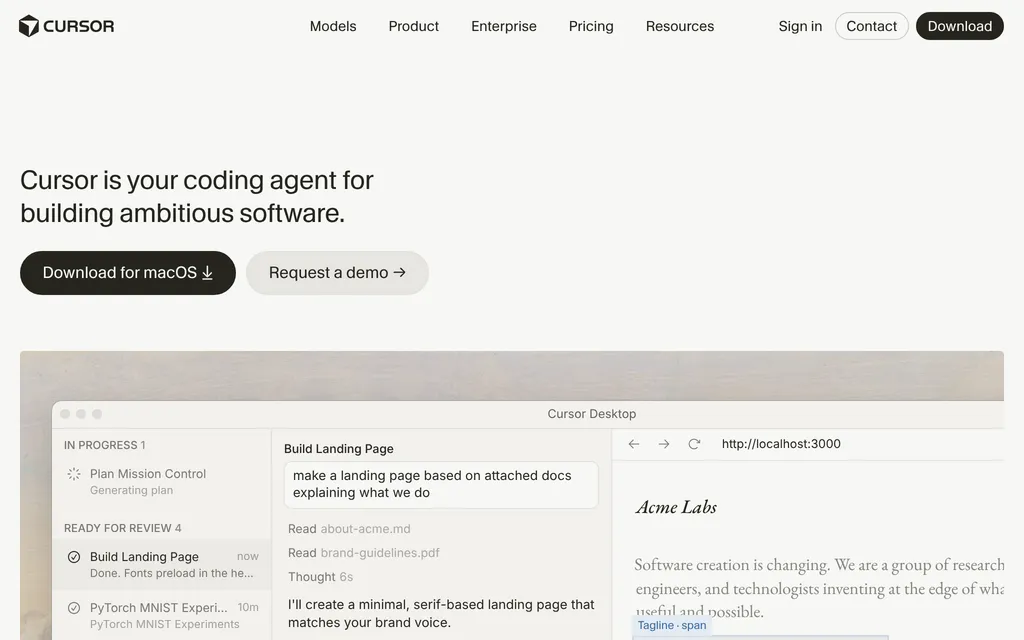
AI code editor with parallel cloud agents, sold in The X Subscription from $8
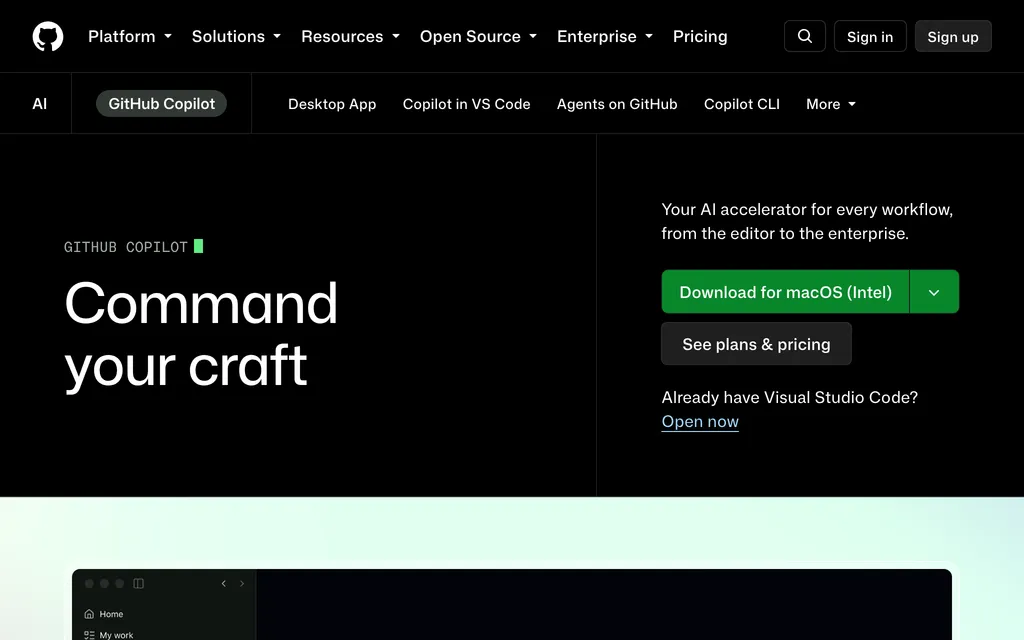
GitHub's coding agent for editors, terminal and PRs: free, Pro $10, Pro+ $39
Key differences
- What it is. Cursor is a desktop code editor with a terminal agent (the Cursor CLI), cloud agents, a web app and an iOS app; JetBrains IDEs connect through the Agent Client Protocol on paid plans. Copilot is an extension for VS Code, Visual Studio, JetBrains IDEs, Xcode, Eclipse, Vim, Neovim, Zed and more, plus Copilot CLI, the Copilot app for macOS, Windows and Linux, and Copilot in the cloud on github.com.
- Models in the plan. Cursor's included weekly pool covers Grok 4.7, 4.6 and 4.5 and Composer 2.5; Claude, GPT and Gemini are billed at API list price from prepaid credit on Premium and up. Copilot's plans include AI credits (Pro $15, Pro+ $70, Max $200) spent per token on Claude, GPT, Gemini, Grok, Kimi and MAI models; Opus, Fable, GPT-6.2 and most Gemini 4 models need Pro+ or higher. Cursor lists no GPT-6 model.
- Entry price. Cursor has a $0 Free plan with Cursor models only and an $8 Plus plan with Grok only. Copilot Free includes 2,000 code completions a month and chat and agent mode with automatic model selection; paid plans start with Pro at $10 a month and make completions unlimited.
- Cloud agents. Cursor's cloud agents run in parallel on their own virtual machines, return pull requests with screenshots, videos and logs, and can build and host live apps; Projects (Premium and up) coordinate long work. Copilot in the cloud, on every plan except Free, takes tasks on github.com and GitHub Mobile and opens pull requests, and from Pro it can hand tasks to Claude Code or Codex (in preview). Copilot's cloud sandboxes draw on your GitHub Actions minutes.
- Code review. Cursor's Bugbot (Premium and up) reviews pull requests on GitHub, GitLab, Bitbucket, Azure DevOps and Cursor's own Git host, Origin. Copilot code review spends credits, about $0.25 to $10 a review per GitHub's estimates, plus Actions minutes, and can approve pull requests as well as comment.
- Your own models. Cursor takes your own OpenAI, Anthropic, Google, Azure or Bedrock key from Premium up, outside its zero data retention agreements. Copilot's CLI and app run your own OpenAI-compatible, Azure or Anthropic endpoint and local Ollama models at no GitHub charge, with an offline mode.
- Data and security. With Privacy Mode on, Cursor doesn't train on your code; it is on by default for teams, and in October an attacker put a malicious copy of Claude Code's extension in Cursor's marketplace cache for about 11 hours. Copilot's individual plans may train GitHub's models unless you opt out (Business and Enterprise don't), and the CLI's command sandbox is off until you turn it on.
Cursor and GitHub Copilot side by side
From our reviews, checked on 23 November 2026. Plans and limits change often; check each vendor's pricing page before you pay.
| What | Cursor | GitHub Copilot |
|---|---|---|
| Type | AI code editor (desktop app) with a terminal agent (the Cursor CLI), cloud agents, a web app and an iOS app. Made by Anysphere, Inc., acquired by SpaceX (announced 14 August 2026) | Coding agent in editor extensions, a terminal agent (Copilot CLI), a desktop app (the GitHub Copilot app) and Copilot in the cloud on GitHub |
| Where it runs | macOS (Apple silicon and Intel), Windows (x64, ARM64) and Linux (.deb, RPM and AppImage on x64 and ARM64); the CLI on macOS, Linux, WSL and Windows; the web at cursor.com/agents; iOS and iPadOS 26 or later on Premium and up (Android planned); cloud agents from Slack, GitHub, Bitbucket, Linear, Microsoft Teams, Jira, Notion and the API; JetBrains IDEs through the Agent Client Protocol on paid plans | VS Code, Visual Studio, JetBrains IDEs and JetBrains Air, Xcode, Eclipse, Vim, Neovim, Zed, SQL Server Management Studio, Azure Data Studio and Raycast; the terminal; the Copilot app for macOS, Windows and Linux; github.com, GitHub Mobile, Slack, Teams and Jira. Plans aren't sold for GitHub Enterprise Server, though the app can now open its repositories |
| Models | Included pool: Grok 4.7, 4.6 and 4.5 and Composer 2.5. Premium and up, at API list price: Claude Fable 5.2, Opus 5.5, Sonnet 5.5 and Haiku 5.5; GPT-5.6 Sol, Terra and Luna; Gemini 4 Carbon, Neon, Argon and Hydrogen, Gemini 3.1 Pro and 3.8 Flash; Muse Wonder. Your own OpenAI, Anthropic, Google, Azure or AWS Bedrock key (not on Plus) | Anthropic Claude, OpenAI GPT, Google Gemini, xAI Grok, Moonshot Kimi and Microsoft MAI models. Free and Student get automatic selection only; Pro adds model choice but not Opus, Fable, GPT-6.2 or most Gemini 4 models, which need Pro+ or higher. Your own or local models in the CLI and the app |
| Free tier | $0: Agent and Chat with limited usage, Cursor models only | Copilot Free: 2,000 code completions a month, chat and agent mode with automatic model selection, and Copilot Fusion Standard; no Copilot in the cloud. Copilot Student is free for verified students |
| Paid plans | Plus $8 a month (Grok models only, per the pricing page), Premium $30, Super $100, Ultra $200; yearly $80, $300, $1,000 and $2,000. Teams $30, $100 or $200 per seat; Enterprise custom. Prices exclude tax | Pro $10 a month ($15 of AI credits), Pro+ $39 ($70), Max $100 ($200); Business $19 and Enterprise $39 per user a month, with 1,900 and 3,900 credits per user pooled. Monthly prices only. Enterprises can also add Copilot access, with no credits, at $0 with GitHub Enterprise Cloud or $10 a user standalone |
| Pay as you go | Past the weekly pool, Cursor models per token from prepaid credit (Grok 4.7: $2 input, $6 output per million tokens); third-party models always at API list price (Claude Opus 5.5: $4 and $20). Credit expires 365 days after purchase; Teams and Enterprise add $0.25 per million tokens on eligible third-party requests | Usage beyond the included credits at $0.01 a credit, priced by model and tokens (Claude Opus 5.5: $4 per million input tokens, $20 per million output), up to a dollar budget; on Business and Enterprise it is on by default. Models you bring cost nothing extra from GitHub |
| How usage is limited | One weekly pool for Cursor models, shared with Grok Chat, Imagine, Voice and Grok Bot; Premium gets 4x the Plus pool, Super 15x and Ultra 50x, per Cursor | AI credits that reset at 00:00 UTC on the 1st of each month and don't roll over; completions and next edit suggestions are unlimited on paid plans. Cloud sandboxes draw on your GitHub Actions minutes from 23 November 2026 |
| Open source | No. The public GitHub repository holds a README, issue templates and a security policy (33.4k stars on 23 November 2026) | No. Copilot CLI ships under a proprietary license, and the Copilot app's repository holds releases and issues |
| Data use | With Privacy Mode on, Cursor has zero data retention agreements with its model providers and doesn't train on your code; with it off, Cursor may store and use code data for training. On by default for teams and Enterprise; the docs don't state the default for individuals | Since 24 April 2026, Free, Pro, Pro+ and Max interactions may be used to train models unless you opt out; Business and Enterprise data is not. Claude Fable 5.2 requires data retention by default |
| Latest notable release | Desktop 3.30 (12 November 2026), with 3.31 on the download page; live apps from cloud agents (5 November), voice chat with agents (6 November) and multiplayer Projects in beta (10 November) | Copilot Fusion, which routes and combines models, generally available (28 October 2026); GPT-6.2 and Gemini 4 Neon added (17 and 18 November); Copilot CLI 1.0.114 (18 November 2026) |
Choose Cursor if
- You want an AI-first editor with agents built in, rather than an extension in your current editor.
- You want cloud agents that run in parallel on their own machines and come back with pull requests, screenshots and videos.
- You are happy to work mostly with Grok 4.7 or Composer 2.5 and buy credit for Claude or GPT when a task needs them.
- Your team reviews pull requests outside GitHub too (GitLab, Bitbucket, Azure DevOps) and wants Privacy Mode on by default.
Choose GitHub Copilot if
- You want to keep your editor: VS Code, Visual Studio, JetBrains, Xcode, Eclipse, Vim, Neovim or Zed.
- You want the lowest entry price with Claude and GPT in the plan: Pro at $10 a month, or Pro+ at $39 for Opus and GPT-6.2.
- Your code lives on GitHub and you want the cloud agent and code review there, including handing tasks to Claude Code or Codex.
- You want to run your own or local models in the CLI and app at no GitHub charge.
FAQ
Is Cursor or GitHub Copilot better?
They suit different setups. Cursor is an editor with parallel cloud agents and Bugbot reviews, built around Grok and Composer models, with Claude and GPT at API list price on top. Copilot keeps your editor, costs less to start and includes Claude, GPT and Gemini models in its monthly credits, with Opus and GPT-6.2 from Pro+.
Which is cheaper, Cursor or GitHub Copilot?
Copilot, for most people who want Claude or GPT. Copilot costs $0 (Free), $10 (Pro, $15 of credits), $39 (Pro+, $70) or $100 (Max, $200) a month. Cursor costs $0 (Free), $8 (Plus, Grok only), $30 (Premium), $100 (Super) or $200 (Ultra), and bills Claude, GPT and Gemini at API list price on top. Prices as of 23 November 2026.
Can I use Claude Opus in Cursor and in Copilot?
Yes in both, at the same token price: Claude Opus 5.5 costs $4 per million input tokens and $20 per million output. In Cursor it comes from prepaid credit on Premium and up, or your own Anthropic key. In Copilot it comes out of the plan's credits on Pro+, Max, Business or Enterprise; Pro can't use it.
Do Cursor and GitHub Copilot work in JetBrains IDEs?
Copilot has an extension for JetBrains IDEs and JetBrains Air. Cursor is its own editor, but its agent reaches JetBrains IDEs through the Agent Client Protocol on paid plans.
Do Cursor and GitHub Copilot train on my code?
Cursor says that with Privacy Mode on, neither it nor its model providers train on your code; it is on by default for teams and Enterprise, and its docs don't state the default for individuals. Since 24 April 2026, Copilot Free, Pro, Pro+ and Max interactions may be used for training unless you opt out; Business and Enterprise data is not.
More comparisons
Read both reviews.
AI code editor with parallel cloud agents, sold in The X Subscription from $8
GitHub's coding agent for editors, terminal and PRs: free, Pro $10, Pro+ $39