
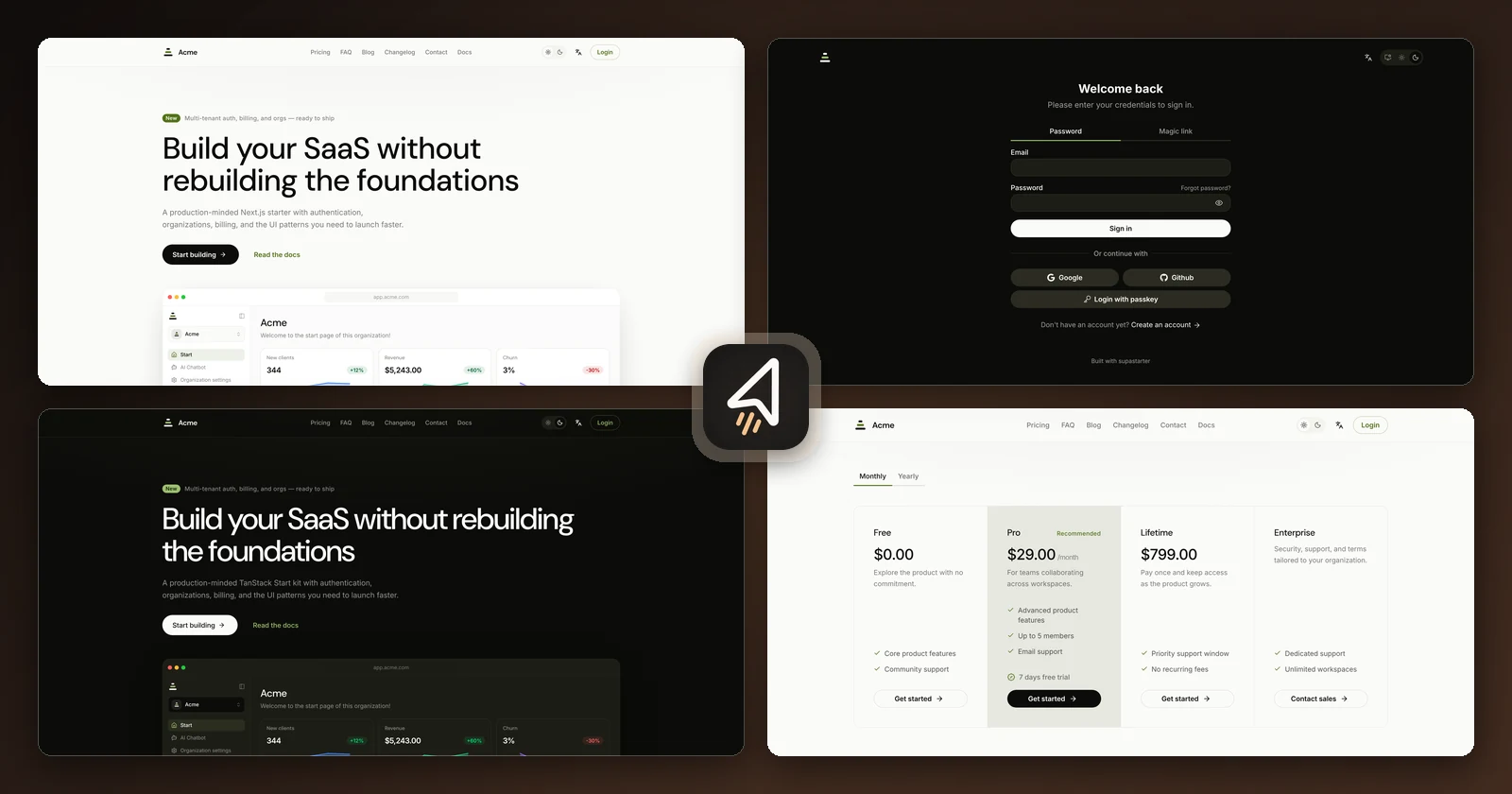
Next.js, Nuxt and TanStack Start SaaS starter with teams, seats and i18n
Akira
Free Next.js 16 starter: Better Auth, Drizzle on Neon, Dodo checkout, Resend
FreeBoilerplates
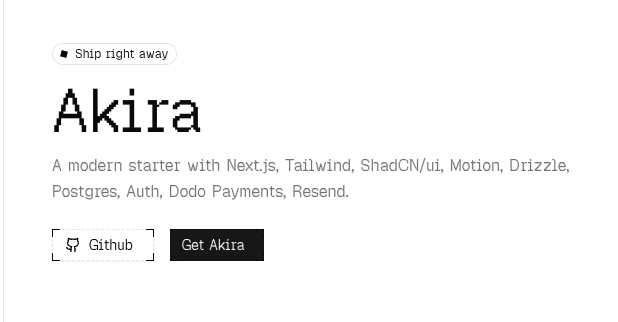
akira.sachi.devExplore the product
AT A GLANCE
- Website
- akira.sachi.dev
- Pricing
- Free
- Categories
- Boilerplates
- Listed
- Mar 2026
- Updated
- Nov 2026
Details about Akira
KEY POINTS
- Tailwind CSS v4
Short verdict: Akira is a free, MIT-licensed Next.js 16 starter with Better Auth, Drizzle ORM on Neon, Dodo Payments, Resend and shadcn/ui already wired together. The code delivers less than its landing page: Google and GitHub sign-in, a welcome email, a test-mode checkout route and a webhook that only logs payments, while the magic links, passkeys, roles, plans and usage-based billing advertised on the page are not in the repository. It was written over four days in March 2026 and hasn't changed since, so it pins Next.js 16.1.6, which has 42 known security advisories; moving to 16.4.6 built without code changes in our test. It suits developers who want a small, readable starting point and will finish billing themselves. Anyone who needs subscriptions, roles or a maintained kit should look at the alternatives below.
How we reviewed it: On 22 November 2026 we cloned the repository at its latest commit, from 7 March 2026, and followed the README quickstart with Bun 1.4.4: install, copy the environment file, push the database schema and start the dev server. We ran a production build, read all 32 source files, audited the dependencies with bun audit, upgraded Next.js and rebuilt, and ran Lighthouse 12.8.2 on the home and sign-in pages of the akira.sachi.dev demo. We did not create Neon, Dodo Payments, Resend, Google or GitHub accounts, so we could not sign in, send email or take a test payment.
What you get for free
| Price | Free, under the MIT license |
|---|---|
| Project | One author, Sachi Goyal. 14 commits between 4 and 7 March 2026 and no releases; 168 GitHub stars and 17 forks. GitHub |
| Stack | Next.js 16.1.6, pinned, with React 19.2 and the React Compiler; Tailwind CSS 4, shadcn/ui and Motion; Better Auth 1.5 with Drizzle ORM on Neon's serverless driver; Dodo Payments; Resend with React Email; Bun as the package manager |
| Size | 32 files and 2,153 lines of TypeScript in src: a landing page, a sign-in page, a protected setup guide and three API routes (auth, checkout and webhook) |
| Setup | 13 environment variables: a Neon database URL, a Better Auth secret and URL, four Dodo Payments values, a Resend key, Google and GitHub OAuth credentials and the app URL |
| Demo | akira.sachi.dev, hosted on Vercel. Its setup guide sits behind sign-in. |
What we found
The quickstart runs, then needs five accounts
The README has four commands. bun install added 854 packages in 3.7 seconds with an empty cache, 1.1 GB on disk. cp .env.example .env gives you 13 empty variables, and the README doesn't say which services they come from. So the next command, bunx drizzle-kit push, stops at url: ''; with a database URL filled in, it read .env and tried to connect. bun dev was ready in 4.4 seconds: the home and sign-in pages rendered, and the setup guide at /docs returned a 500 error, "No database connection string was provided to neon()". Before anything behind sign-in works, you need a Neon database, a Dodo Payments account, a Resend key and OAuth apps on Google and GitHub.
The setup guide itself, which you only see after signing in, lists four steps: clone, install, set four variables and run bun dev. It leaves out the schema push and the OAuth credentials, without which no one can sign in.
A production build needs three secrets first
bun run build failed with the copied environment file. The Dodo webhook handler, the Neon client and the Resend client are all created when their files load, so the build stopped at "Collecting page data" three times in a row: "Secret can't be empty" for the webhook, then the neon() error, then "Missing API key" from Resend. With placeholder values for those three variables it built in 28 seconds, with a warning that Better Auth was using its default secret. A deploy without them set fails the same way.
Sign-in is Google and GitHub only
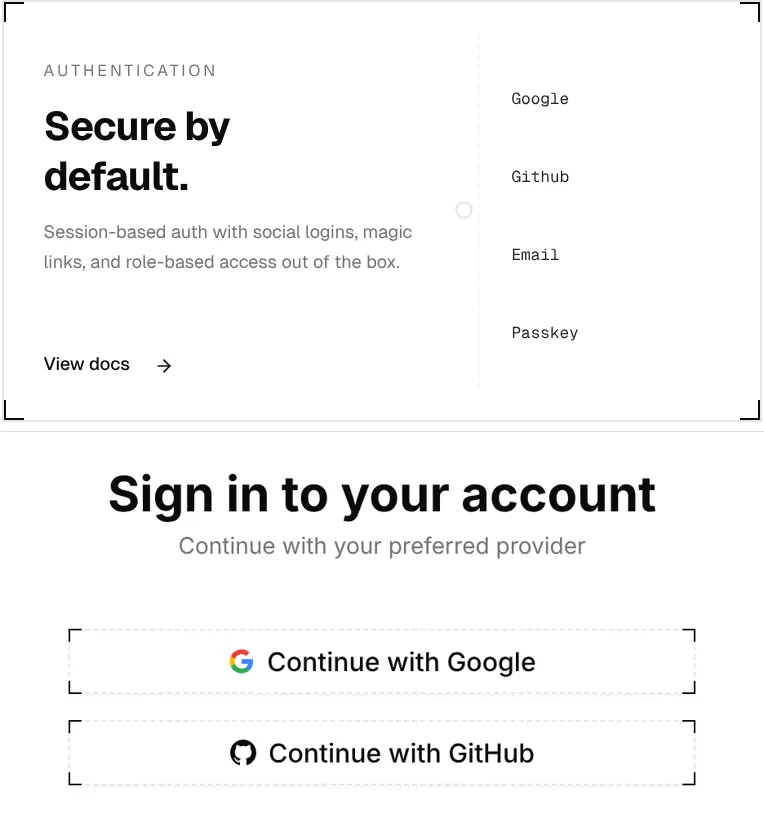
The landing page promises "session-based auth with social logins, magic links, and role-based access out of the box" and lists Google, GitHub, Email and Passkey. The Better Auth configuration enables two social providers, Google and GitHub, and nothing else: no email and password, no magic links, no passkeys and no roles. The database schema is Better Auth's four default tables (user, session, account and verification), with no role or plan column. Better Auth offers those features as plugins, so they can be added, but that work is yours.
Payments stop at a test-mode checkout
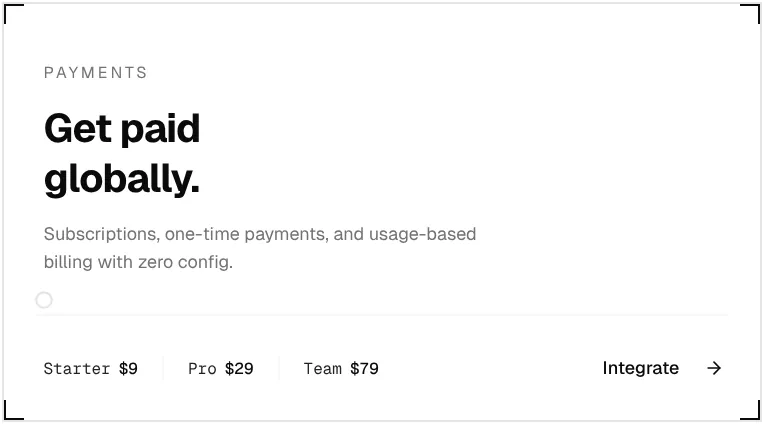
The payments card promises subscriptions, one-time payments and usage-based billing "with zero config", over Starter, Pro and Team plans at $9, $29 and $79. In the code, /api/checkout wraps Dodo's static checkout with environment: "test_mode" hard-coded and expects a product ID in the URL; the DODO_PRODUCT_ID variable in the example file is never read, and no page links to the checkout. The webhook handles two events, payment succeeded and payment failed, and only writes them to the console: no customer, subscription or plan is stored. The three plans exist only on the landing page.
The welcome email goes out from Resend's test address
When a user signs up, Akira sends a "Welcome!" message built with React Email through Resend, from [email protected]. Resend delivers from that address only to your own inbox until you verify a domain (see our Resend review), so new users would get nothing, and the error only goes to the server log. Change the sender once your domain is verified.
Locked to a Next.js release with critical advisories
bun audit listed 201 advisories in the locked dependency tree, 7 critical and 81 high, many of them in build tools. Three direct dependencies are affected: Next.js 16.1.6, pinned to that exact version, has 42, including 4 critical remote code execution issues; Better Auth 1.5.2 has 13, several in plugins Akira doesn't use; and Drizzle ORM 0.45.1 has one high-severity SQL injection issue, fixed in 0.45.2. Updating was easy: after bun add [email protected], the matching eslint-config-next and bun update, the build passed in 31 seconds and the audit dropped to 4 advisories (1 high, 3 moderate), none in direct dependencies. Do this before you build anything on Akira.
Performance and SEO
One Lighthouse 12.8.2 run per page and form factor on the akira.sachi.dev demo, 22 November 2026. Accessibility, best practices and SEO were the same on mobile and desktop.
| Page | Performance, mobile / desktop | Accessibility | Best practices | SEO |
|---|---|---|---|---|
| Home | 84 / 93 | 96 | 100 | 100 |
| Sign-in | 93 / 100 | 100 | 100 | 100 |
The home page transfers 493 KiB, 275 KiB of it JavaScript and 189 KiB fonts (Geist, Geist Mono and Geist Pixel). Its only failure is low contrast on the 9 px stack labels. Pages have titles, descriptions and Open Graph tags but no structured data, and metadataBase isn't set: on Vercel, where the demo runs, the share image URL resolves correctly, but our local production build wrote http://localhost:3000/og.png as the share image, which is what other hosts would serve.
What you still have to build
Billing. Plans, a customer record per user, subscription state from webhooks, a checkout button and Dodo's live mode.
Sign-in options and roles. Email, magic links, passkeys or roles through Better Auth plugins, with their tables.
The app. The only protected page is the setup guide; dashboard, settings and account pages are yours.
Email from your domain. Verify a domain in Resend and change the sender address.
Updates and metadata. Current Next.js, Better Auth and Drizzle versions, and
metadataBasefor your domain.Your landing page and legal pages. The current home page advertises Akira itself, including the plans that don't exist.
Pros and cons
Pros
Free under MIT and small enough to read in an afternoon: 32 source files.
Current choices: Next.js 16 with the React Compiler, Tailwind CSS 4, Better Auth and Drizzle.
Install takes seconds with Bun, and the move to Next.js 16.4.6 built without code changes.
The demo's pages are light and accessible: 100 for accessibility on sign-in, 96 on the home page.
Cons
The landing page advertises magic links, passkeys, roles, plans and usage-based billing that the code doesn't have.
Payments end at a test-mode checkout and a webhook that only logs.
No commits since March 2026, and the pinned Next.js has 4 critical advisories.
The build fails until three secrets are set, and the README doesn't say where its 13 variables come from.
How Akira compares
Next.js SaaS Starter from Vercel is also free and MIT-licensed, and has what Akira's landing page promises: Stripe Checkout and the Customer Portal for subscriptions, Owner and Member roles, and email and password sign-in, on Postgres with Drizzle. It has 16.3k GitHub stars, but its last commit, on 11 December 2025, left it on a Next.js 15.6 canary, so it needs updating too. Pick it for working subscriptions and teams at no cost.
Makerkit costs $349 one-time for one developer ($226.85 on sale on 22 November 2026), with lifetime updates and unlimited projects, for Next.js 16 on Supabase, Drizzle or Prisma, including teams, invitations, roles and permissions, per its pricing page. Pick it if you would rather pay for a maintained B2B kit.
See all boilerplates.
Who should use Akira
Use Akira if you want a small Next.js 16 project with Better Auth, Drizzle, Dodo Payments and Resend already installed, plan to read every file, and will build billing and roles yourself; update its dependencies first. Skip it if you need working subscriptions, more sign-in methods, roles or a maintainer you can count on.
FAQ
Is Akira free?
Yes. Akira is open source under the MIT license, so you can use it in commercial and client projects. The services it connects to, Neon, Dodo Payments and Resend, have their own pricing.
Does Akira handle subscriptions?
No. It has a Dodo Payments checkout route hard-coded to test mode and a webhook that only logs payment events. The plans, subscriptions and usage-based billing shown on its landing page are not in the code.
Which sign-in methods does Akira support?
Google and GitHub, through Better Auth. Email, magic links, passkeys and roles appear on the landing page but are not configured; Better Auth plugins can add them.
Is Akira still maintained?
Not actively. All 14 commits were made between 4 and 7 March 2026, and there are no releases. Its pinned Next.js 16.1.6 has known security advisories, so update it before use; Next.js 16.4.6 built without code changes in our test.
What do I need to run Akira?
Bun, a Neon Postgres database, Dodo Payments and Resend accounts, and OAuth apps on Google and GitHub: 13 environment variables in all. The production build fails until at least the database URL, the Dodo webhook secret and the Resend key are set.
Get new tools like Akira weekly
Every Monday: the templates, components and tools added to Tailkits that week, each checked by an editor. Free, unsubscribe in one click.
17 new in the last 30 days313 products reviewed so farSee what you get
KEEP EXPLORING
More boilerplates Good company for Akira.
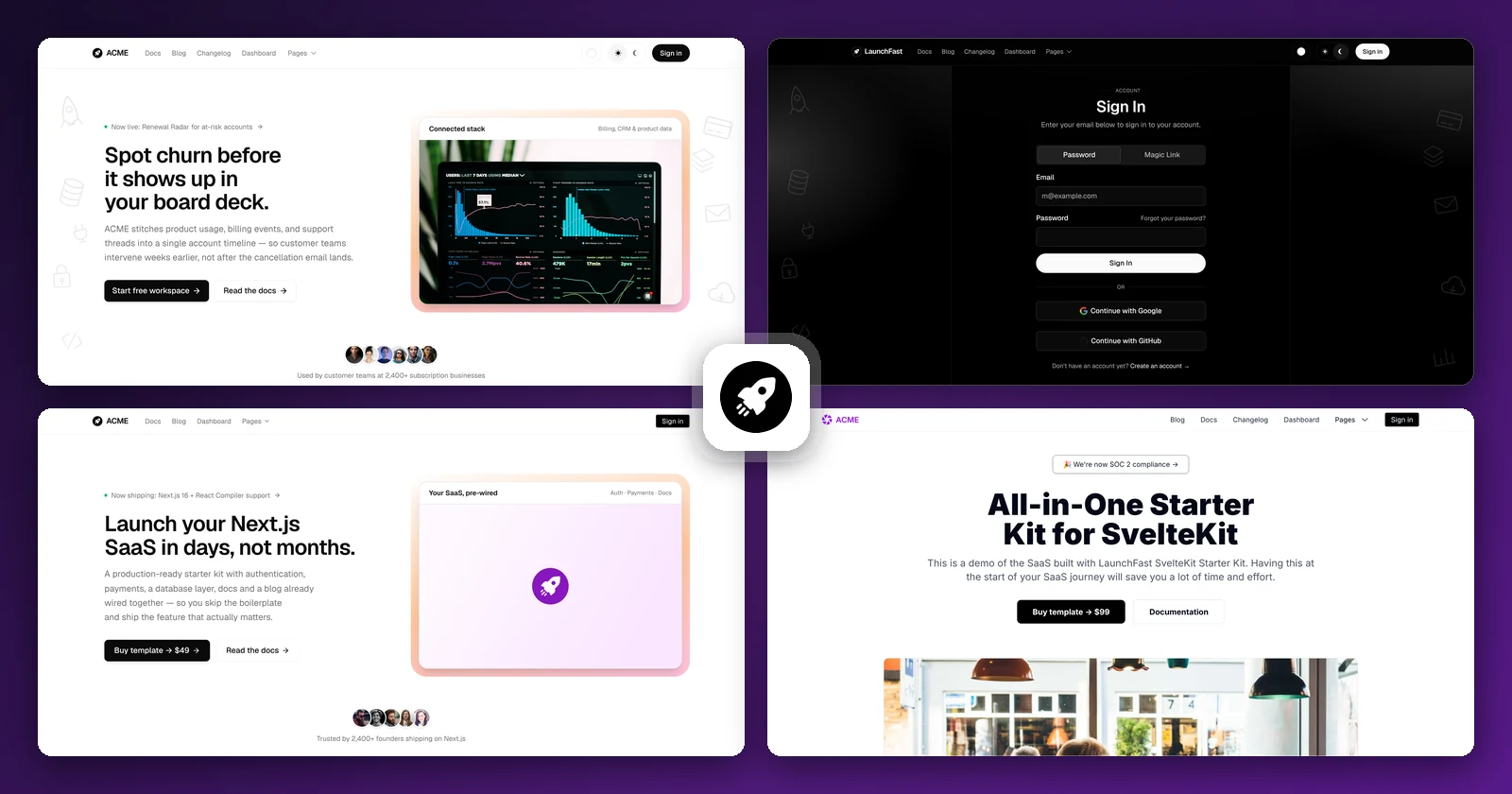
Astro, Next.js and SvelteKit SaaS starter kits with swappable providers
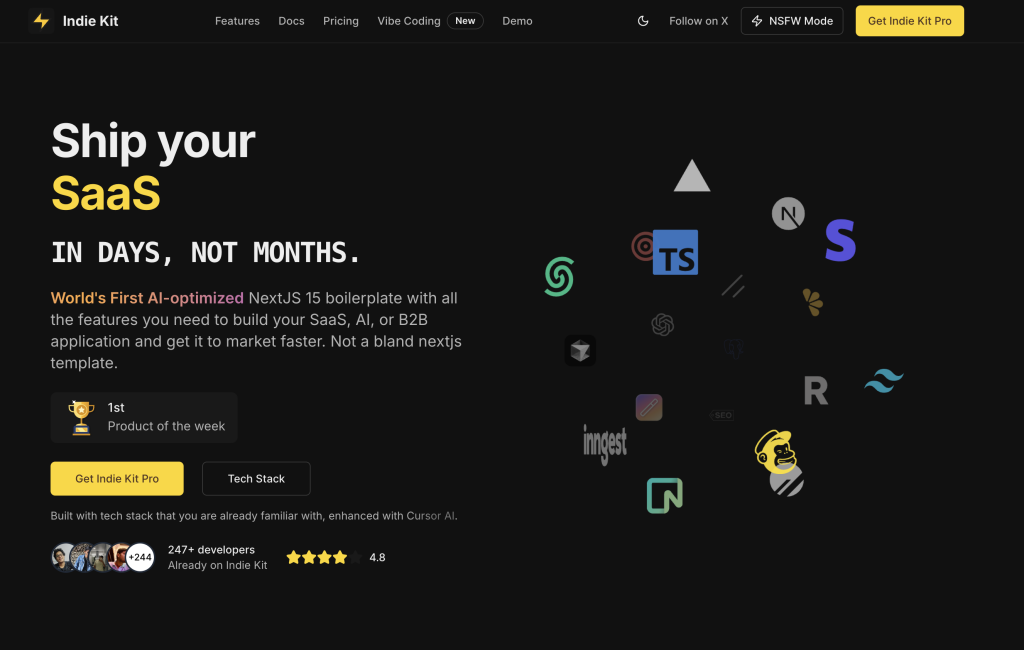
AI-ready Next.js SaaS starter kit overview