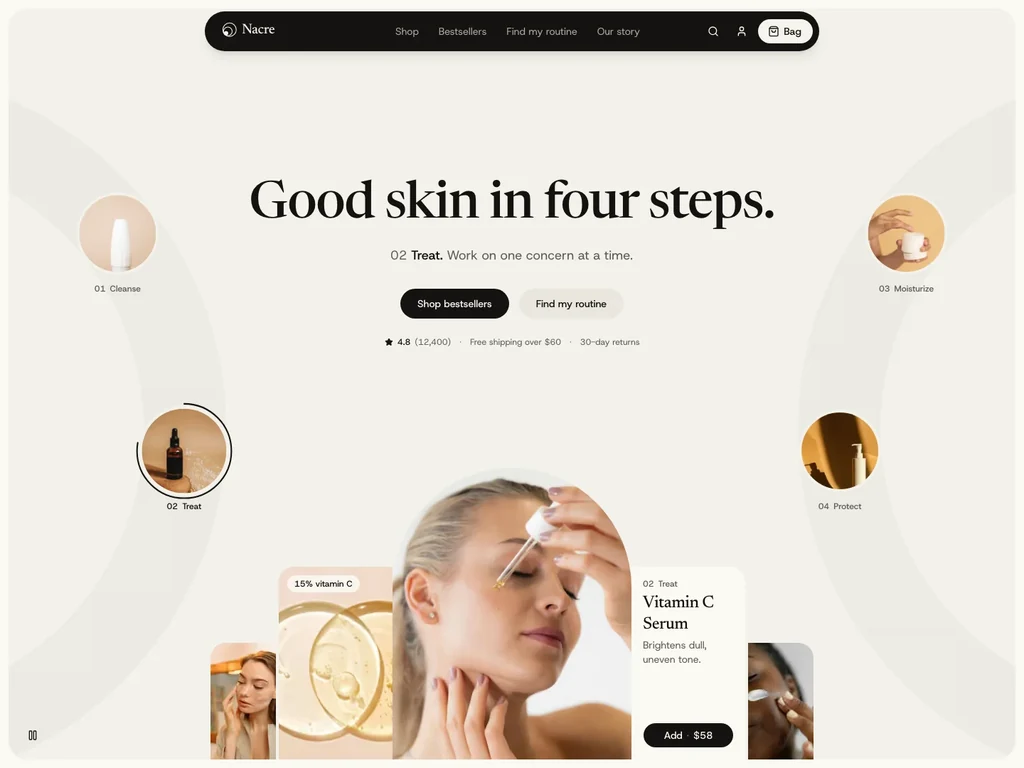
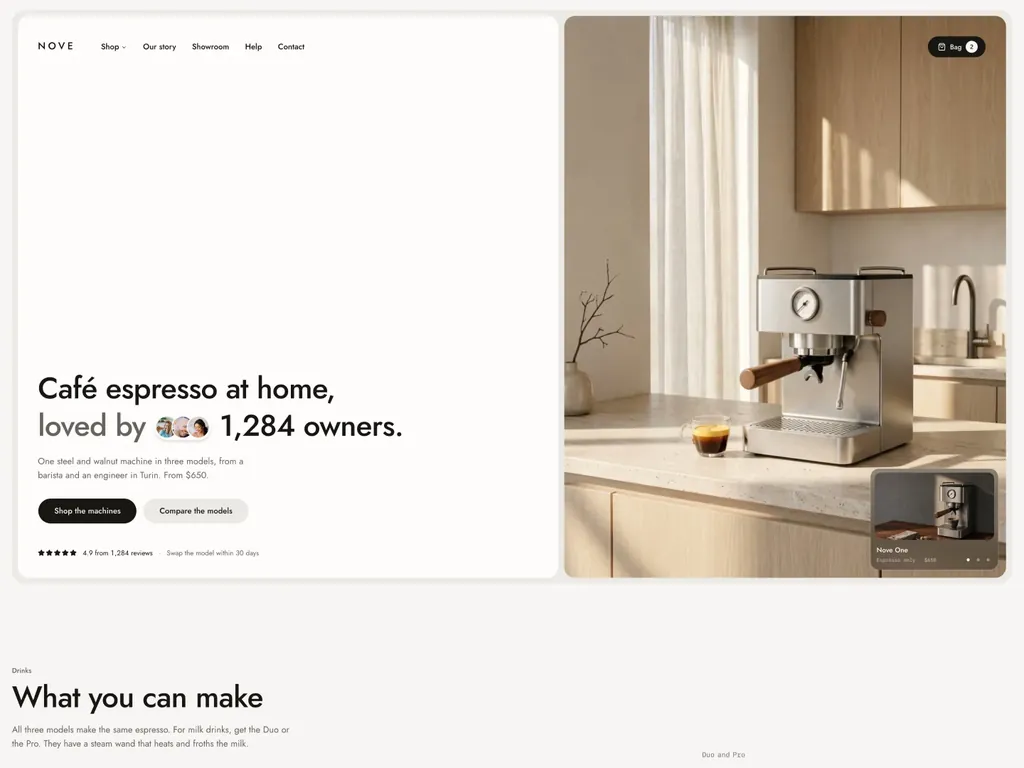
Next.js and Astro single-product store with a model picker and checkout UI
Shadcn UI Kit
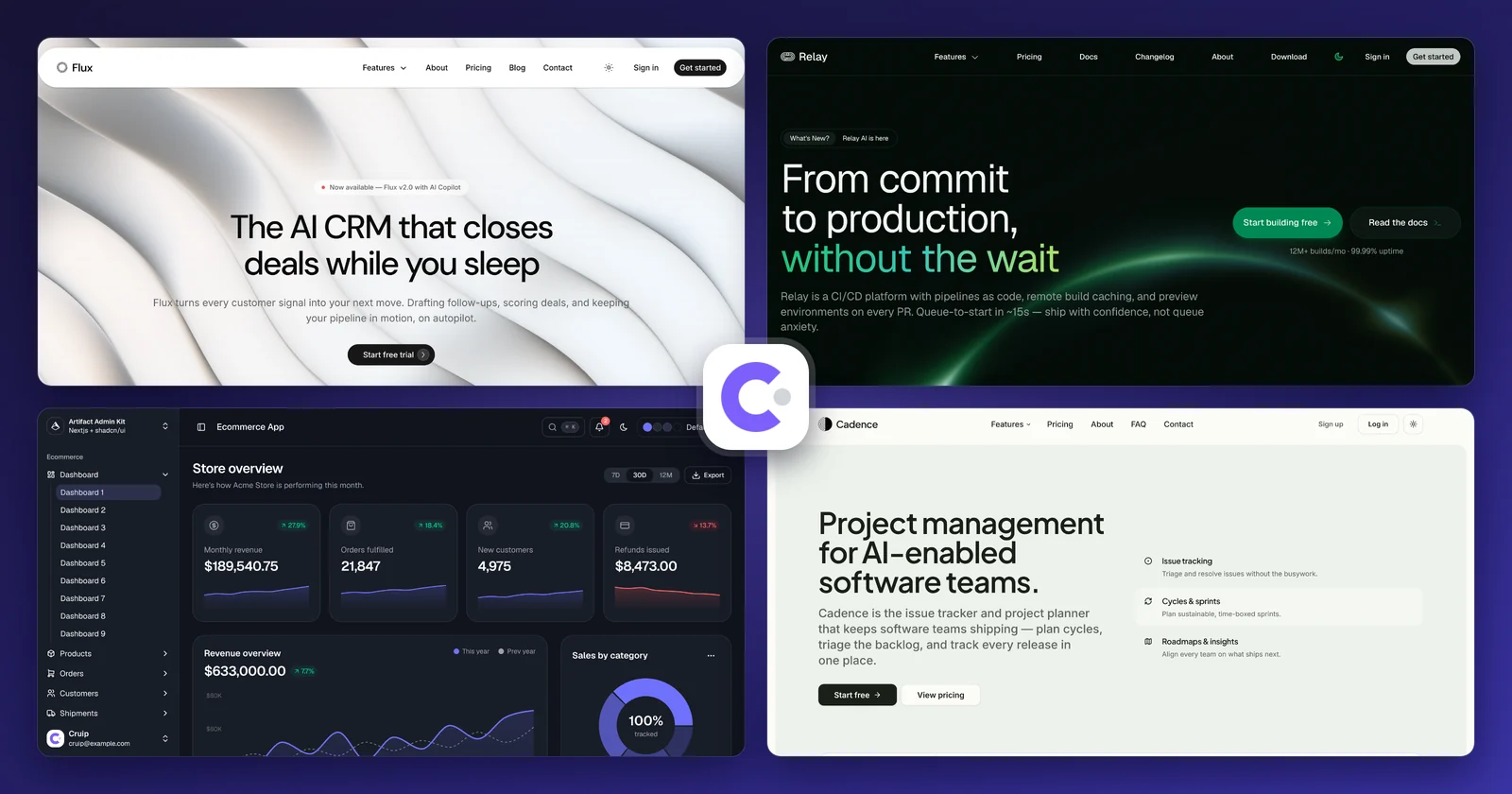
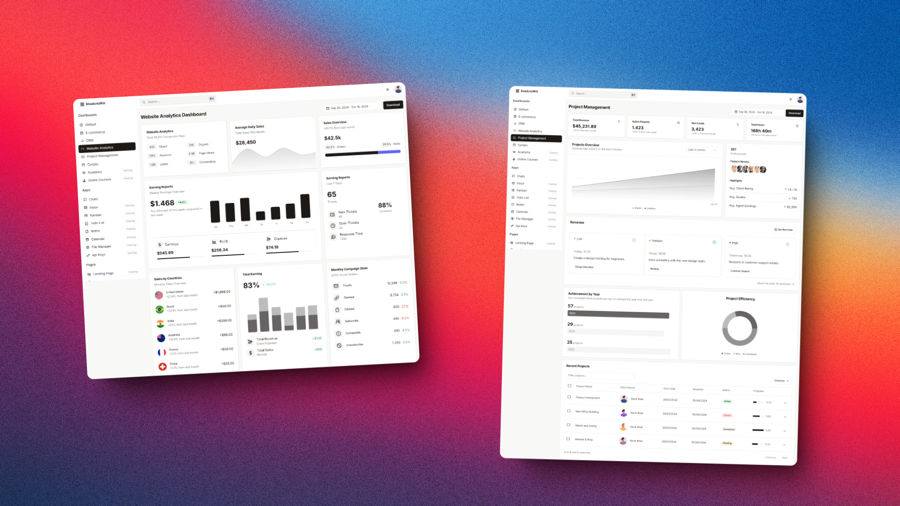
16 Next.js admin dashboards, 17 web apps and 6 site templates on shadcn/ui
PaidTemplates
shadcnuikit.comExplore the product
AT A GLANCE
- Website
- shadcnuikit.com
- Pricing
- Paid
- Categories
- Templates
- Listed
- Oct 2024
- Updated
- Oct 2026
Details about Shadcn UI Kit
KEY POINTS
- Tailwind CSS v4
- Figma file
- Copy & paste
Short verdict: Shadcn UI Kit sells a lot of finished admin screens for little money: 16 dashboards, 17 app screens and six website templates on Next.js 16 and Tailwind CSS v4, for $79 for one user during the current sale. In the demo the apps respond like real ones, and a Customize panel restyles every screen without code. All of it is front end: the app data we entered was gone after a reload, the AI Chat gave the same canned answer to all three of our questions, and the dashboards scored 28 and 45 for mobile performance. It suits a React developer or a small team building an internal tool or a SaaS admin who will connect their own backend. Look elsewhere if you need Vue, want to publish your code as open source, or need a working product rather than screens.
How we reviewed it: On 25 October 2026 we used the live demo at shadcnuikit.com/dashboard on a 1,440 px desktop and a 390 px phone screen. We changed the theme and reloaded, sent a chat message, filled the POS cart, ticked tasks, asked the AI Chat three questions and logged the requests the pages sent. We ran Lighthouse 12.8.2 once each on the e-commerce and Classic dashboards, read the free edition's README and registry on GitHub, and opened the Pro checkout without paying. We did not buy the kit, so we could not judge the premium source code, the Figma file, the Page Builder or the MCP server. Prices, counts and license terms come from shadcnuikit.com on the same day.
What you get for $79
| Price | $79 one-time for one user during the current sale ($129 regular), per Bundui, the company behind the kit. Team is $199 ($299) for 10 users and Enterprise $499 ($799) for unlimited users. Payment goes through Paddle (cards, PayPal, Apple Pay and Google Pay), with VAT included. |
|---|---|
| Dashboards and apps | 16 admin dashboards and 17 web apps, four of them AI apps, per Bundui. Between the demo's sidebar and its sitemap we found all 16 dashboards and 17 apps, plus Logistics and Affiliate dashboards marked Coming and 38 more pages: settings, profiles, orders, pricing, sign-in, error and empty states. |
| Website templates | Shopcn (store), Signalry (AI SaaS landing page), Neofolio (portfolio), Soho (chat app) and Cosmic (SaaS landing page), all Next.js, plus the free Waitly. Each also sells alone: Cosmic, Neofolio and Soho for $49, Signalry for $59 and Shopcn for $69. |
| Blocks and components | 555 blocks, 564 free components and 70 examples, per the home page; the pricing table rounds them to 550+ and 560+ |
| Tools | A Figma file, a Page Builder, a Theme Generator (beta) and an MCP server for AI code editors, in every paid plan |
| Last update | 12 October 2026, when the Figma file shipped; Shopcn, Signalry and 177 blocks arrived on 8 October, per the changelog |
| Stack | Next.js 16, React 19, TypeScript, Tailwind CSS v4 and shadcn/ui on Radix UI or Base UI primitives |
| Free edition | MIT-licensed on GitHub: one dashboard with seven pages, 527 components, 16 blocks and 14 examples, per its README |
| License | Unlimited personal and commercial projects, including client work and paid SaaS, with no attribution. You can't resell or share the code, deliver one project to several clients without substantial changes, put premium items in public repositories, or build site builders with it. License terms |
| Support | Replies within 1-12 hours on Pro and 1-4 hours on Team and Enterprise, per the pricing table; the FAQ says within 48 working hours |
What we found in the demo
Sixteen dashboards behind one sidebar
The sidebar lists the 16 dashboards, and six of them open into sub-pages: E-commerce alone has a dashboard, product list, product detail, add-product form, order list and order detail. Each screen we opened shares one header with a store switcher, a notifications menu, a light and dark toggle and the Customize panel. The e-commerce date range defaulted to the last four weeks (28 September to 25 October 2026), while other sample data is older: the todo list is dated June 2023. The demo adds its own sales pitch, a "Get all 16 dashboards" card in the sidebar and a "Like what you see?" popup.
A Customize panel that restyles every screen
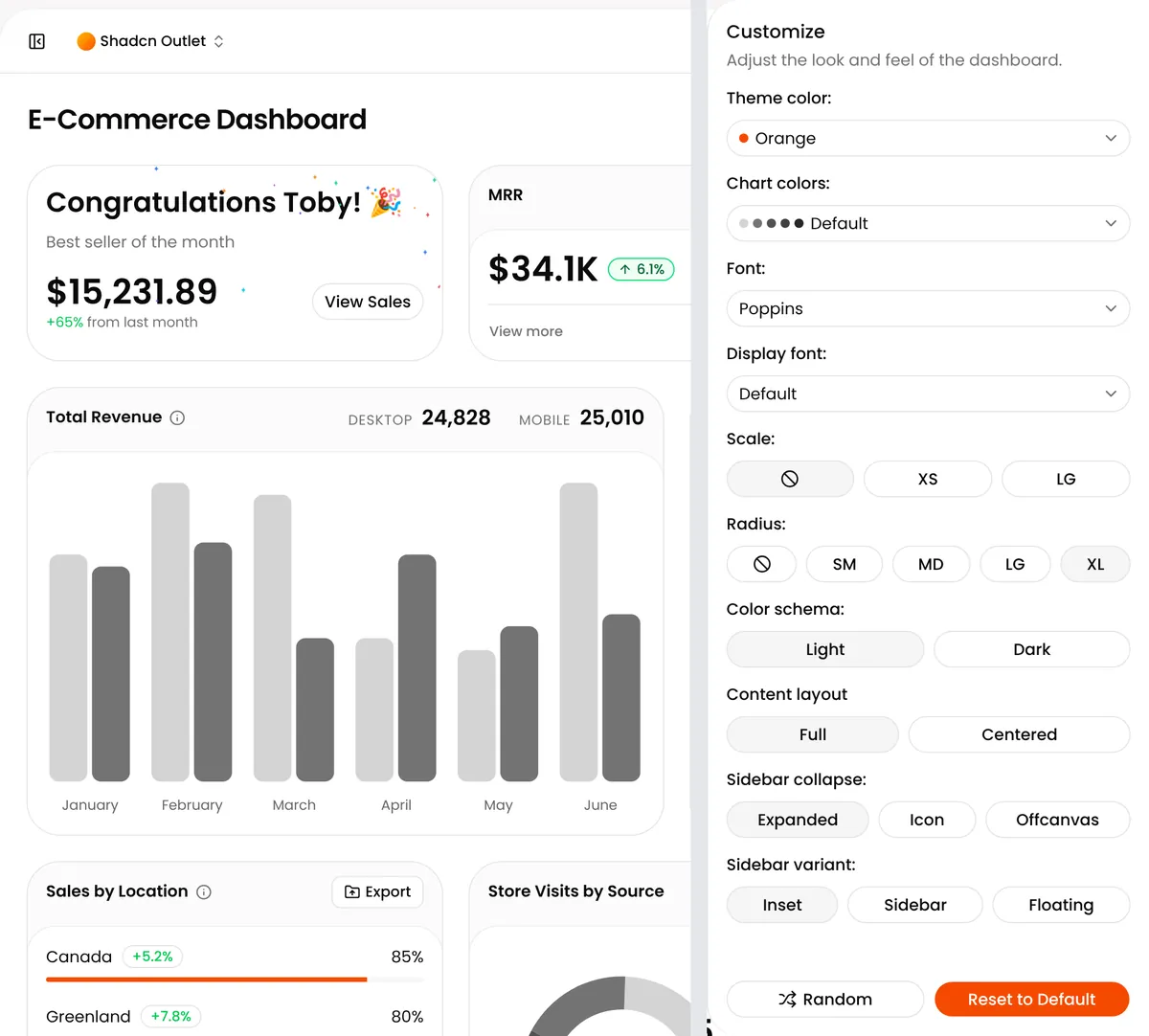
The panel offers 18 theme colors, 18 chart palettes, seven body fonts, eight display fonts, three scale settings, five corner radii, light or dark mode, full or centered content, three sidebar collapse modes and three sidebar styles. We picked Orange, the XL radius and Poppins, then reloaded: all three stuck, saved in cookies (theme_color, theme_radius, theme_font). Charts follow their own palette setting, so they stayed grey.
Apps that work in the browser and forget on reload
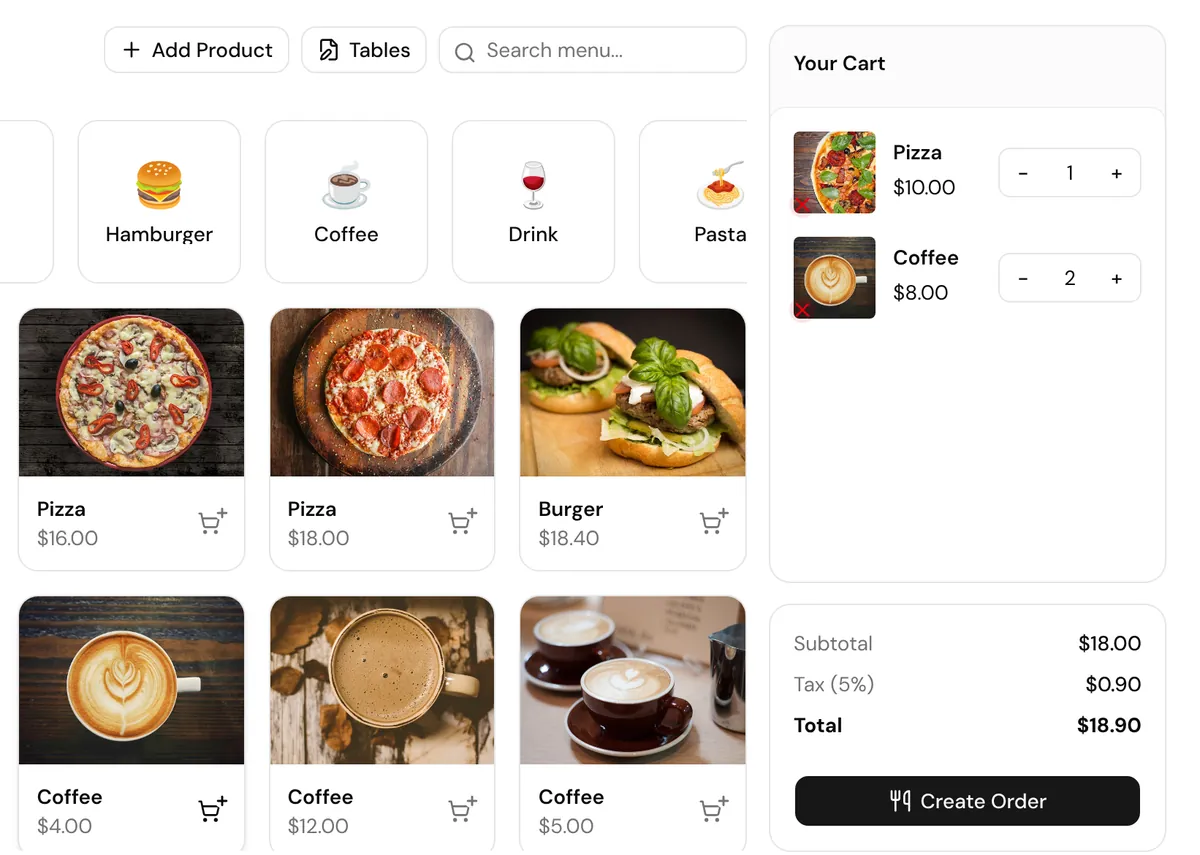
The apps run on sample data but respond to input. A chat message we sent appeared in the thread and in the conversation list. In the POS app, a $10 pizza and two $4 coffees came to an $18.00 subtotal, $0.90 tax at 5% and an $18.90 total, and Create Order opened a dialog to assign the order to a table on one of three floors. Ticking a task in the todo list worked until we reloaded the page, when it was unticked again: the demo keeps nothing in the browser's local storage. Apart from Google Analytics hits, the pages made no POST requests in any of these flows.
AI apps without a model behind them
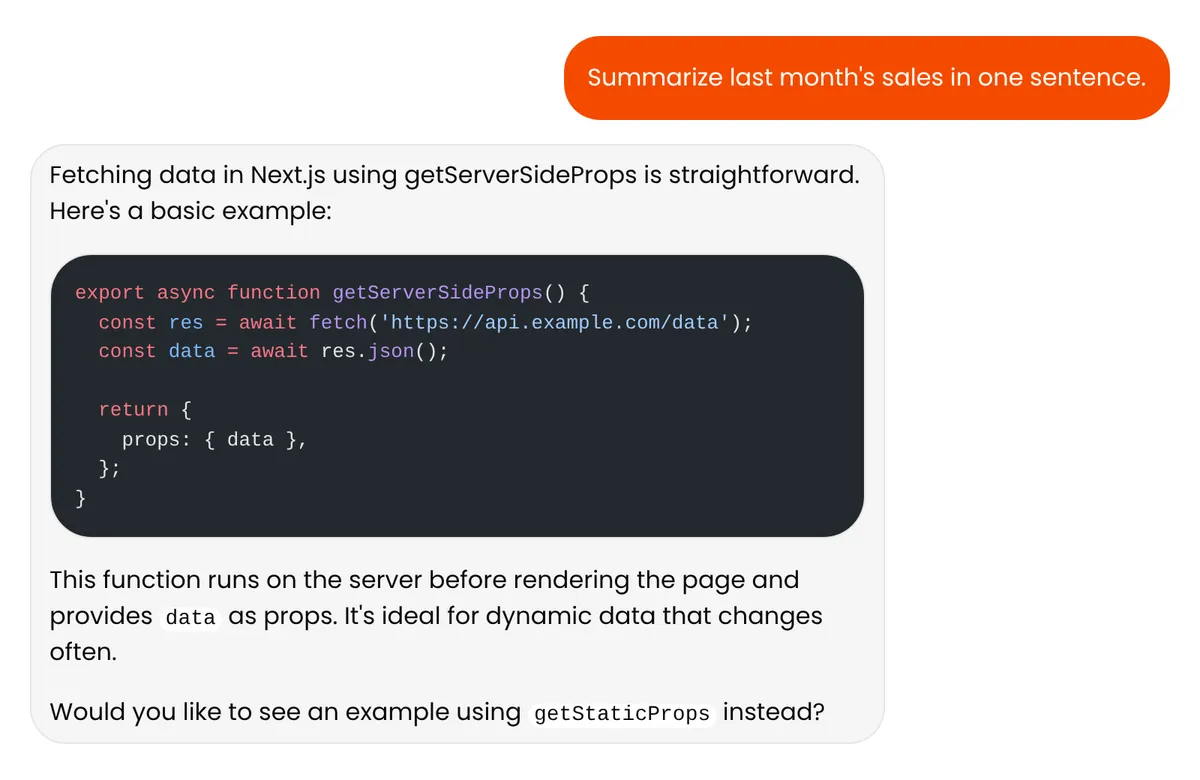
We asked AI Chat to summarize last month's sales, then for the capital of France, then for a haiku. All three times it streamed back the same answer about fetching data with getServerSideProps in Next.js, and the page made no POST request to any AI service. Plan to connect your own model, streaming endpoint and usage limits; we did not test AI Chat V2, Image Generator or Text to Speech.
Phone screens
On a 390 px screen none of the five pages we checked (e-commerce, CRM, Kanban, Mail and Users) scrolled sideways. The sidebar opens as a sheet, stat cards stack in one column and the header shrinks to icons.
A free edition you can install from a registry
The MIT-licensed free edition on GitHub has its own small dashboard and the free components. Its registry file lists 530 components and 29 blocks, and the README installs them with the stock shadcn CLI once the @shadcnuikit registry is added to components.json, for example npx shadcn@latest add @shadcnuikit/hero1. The registry entry for that hero block resolved for us with its source file, lucide-react and shadcn's button as dependencies.
Performance and SEO
One Lighthouse 12.8.2 run per page, 25 October 2026:
| Page | Performance | Accessibility | Best practices | SEO |
|---|---|---|---|---|
| E-commerce dashboard, mobile | 28 | 76 | 100 | 100 |
| E-commerce dashboard, desktop | 83 | 77 | 96 | 100 |
| Classic dashboard, mobile | 45 | 79 | 100 | 92 |
| Classic dashboard, desktop | 89 | 81 | 96 | 92 |
The e-commerce dashboard transfers about 2 MB: 715 KB of images, 657 KB of JavaScript and 466 KB of fonts. On mobile its largest contentful paint came in at 9.4 s and total blocking time at 1,950 ms, and Lighthouse estimates 536 KB of savings from correctly sized images. Part of the weight is the demo itself: it loads 12 font families for the font switcher, and on the Classic dashboard the largest paint Lighthouse timed was the demo's own sales popup.
Accessibility lost points on every page for buttons without names (the sidebar, notifications and Customize icons in the header), low-contrast text and ARIA attributes that don't match their roles. The header is the same on every screen we opened, so one fix should cover those buttons everywhere. The dashboards we checked carry no structured data, which is fine for app screens. The Shopcn product page we checked carries none either, so a store built on it needs Product markup added.
What you still have to build
Data. Every dashboard and app reads sample data in the browser. Connect your API or database and decide what should persist; our todo ticks did not survive a reload.
Accounts. The sign-in, register and forgot-password screens need an auth provider behind them.
AI. The AI apps need a model, a streaming endpoint and usage limits.
Orders and payments. The POS order, billing settings and pricing pages are screens only.
Accessibility and weight. Name the icon buttons, fix contrast, drop the fonts you don't use and size the images.
Sample content. Bundui's license calls the demo images, avatars, logos and copy placeholders, so replace them before launch.
Pros and cons
Pros
16 dashboards, 17 apps and six website templates for $79 during the sale is a lot of finished UI for the price.
The Customize panel changes colors, fonts, radius and the sidebar without code, and remembers the choice.
The apps react to input in the browser: chat, POS totals and table assignment, task states.
The free MIT edition and its public registry let you read the code before you pay.
The license covers unlimited projects, including client work and paid SaaS.
Cons
Front end only: no data layer, auth or AI model, and app data doesn't persist across a reload.
Weak mobile performance in the demo (28 and 45), with heavy fonts and oversized images.
Accessibility scores of 76 to 81, starting with unnamed header buttons.
Premium code can't go into public repositories, and Bundui generally doesn't refund.
React and Next.js only, and Pro covers one person: a second developer needs Team at $199.
How Shadcn UI Kit compares
Shadcnblocks Premium costs $299 one-time for 21 Next.js and Astro marketing templates, its block library, a Figma kit and an Admin Kit; the $149 Pro plan has blocks and components only. Pick it if marketing pages matter more than dashboards.
Artifact by Cruip is $129 for one Next.js 16 admin kit with 100 pages across five apps, from e-commerce to a developer console. Pick it if you want one deep app rather than 16 dashboards.
Shadcn Admin, a separate product from the same maker, sells dashboards as standalone Next.js, React (Vite) and Vue.js projects: $199 during its sale ($299 regular) for one seat and three projects, with two dashboards live and four announced. Pick it if you need Vue.
See all dashboard templates for more options.
Who should buy Shadcn UI Kit
Buy it if you build admin panels, internal tools or SaaS back offices in React and Next.js, want many ready screens and a theme you can change in minutes, and have a developer to connect data, auth and any AI features. Skip it if you need Vue or Svelte, plan to open-source your app, or want a product with a working backend out of the box.
FAQ
Is Shadcn UI Kit a one-time purchase?
Yes. Pro is $79 once during the current sale ($129 regular) for one user, with lifetime updates. Team is $199 for 10 users and Enterprise $499 for unlimited users, also one-time.
Can I use Shadcn UI Kit for client projects?
Yes. The license allows unlimited personal and commercial projects, including sites and apps you hand over to clients. You can't deliver the same project to several clients without substantial changes, put premium items in public repositories, or resell the code.
Is there a free version of Shadcn UI Kit?
Yes. The free edition on GitHub is MIT-licensed and has one admin dashboard with seven pages, 527 components, 16 blocks and 14 examples, per its README. Free items install with the shadcn CLI from the @shadcnuikit registry.
Do the dashboards come with a backend?
No. The dashboards and apps run on sample data in the browser. In our test nothing we entered in the apps survived a reload and the AI Chat gave the same canned reply to every question we asked, so you connect your own API, database, auth and AI provider.
Can I get a refund?
Generally no. Bundui's FAQ says it refunds only when a technical issue is caused by its code and you send details and proof of the problem.
KEEP EXPLORING
More templates