Next.js and Astro single-product store with a model picker and checkout UI
Nextspace Astro
Astro theme for architecture and interior studios, with project case studies
PaidTemplates
themefisher.comExplore the product
AT A GLANCE
- Website
- themefisher.com
- Pricing
- Paid
- Categories
- Templates
- Listed
- May 2025
- Updated
- Oct 2026
Details about Nextspace Astro
KEY POINTS
- MDX support
- Tailwind CSS v4
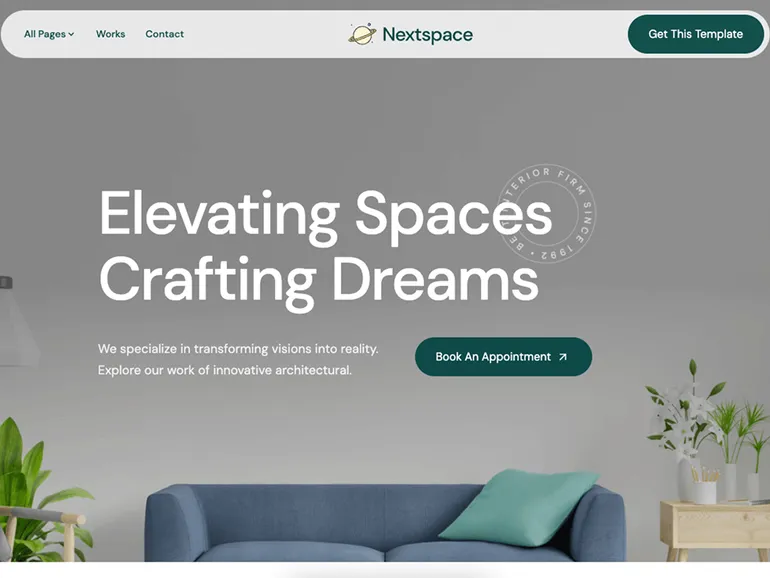
Short verdict: Nextspace Astro is a 16-page Astro and Tailwind CSS theme for architecture, interior design and renovation studios, built around a projects grid with a case-study page for each project. The layout is calm, no page scrolls sideways on a phone, and desktop pages scored 93 and 99 for performance. Nearly all of the content is sample material you will replace: the FAQ answers questions about a SaaS free plan, project and blog pages reuse privacy-policy wording, and the contact form posts nowhere. It suits a studio with its own photos and copy and a developer to connect the form. Skip it if the site must take inquiries on day one, or if you want Next.js, which Themefisher sells as a separate theme.
How we reviewed it: On 31 October 2026 we used the live demo on a desktop and on a 390 px phone screen, loaded all 30 pages in its sitemap, opened the mobile menu, filled in and sent the contact form while logging network requests, and ran Lighthouse 12.8.2 on the home page and a project page. The demo's generator tag reports Astro 6.4.4, so it predates version 2.2.1, the Astro 7 update of 27 June 2026, and we could not try that build. We did not buy the theme, so we can't judge the source code, the Sitepins setup or the AI agent files. Prices, the changelog and the policies come from themefisher.com on the same day.
Disclosure: Our links to Themefisher carry a referral tag.
What you get for $97
| Price | $97 one-time, plus local taxes, for one website, with 12 months of downloads and updates and 3 months of support. The license to use the site you built does not expire. Also part of Themefisher's Astro Bundle, from $137. |
|---|---|
| Version | 2.2.1, updated 27 June 2026 to Astro 7. First released on 15 May 2025, with six releases between November 2025 and June 2026. |
| Pages | 16 page types, per Themefisher: home, about, services, projects, project details, gallery, reviews, career, blog, blog post, FAQs, contact, elements, terms, privacy and 404. The demo's sitemap lists 30 URLs, including 7 sample projects and 9 blog posts. |
| Stack | Astro and Tailwind CSS 4 (we confirmed the version in the demo's CSS), with Markdown and MDX content. React runs the animated counters and the FAQ accordion. Astro only: Nextspace Nextjs is a separate $97 product. |
| Extras | Optional configuration for Sitepins, an open-source Git-based CMS, a Google Tag Manager slot, deploy settings for Cloudflare, Vercel and Netlify, and AI agent skills added on 16 June 2026, per Themefisher. |
| License | Personal and commercial use, one website per license. No reselling or redistributing, and the demo images, logos and illustrations must be replaced with your own. License |
| Support and refunds | Support runs Saturday to Thursday, 9 AM to 5 PM GMT+6, and covers bugs and setup, not adding forms or a CMS. Refunds are given within 14 days only if the theme isn't delivered or doesn't work as described, despite the product page's "14 Days Money Back Guarantee" badge. |
What we found in the demo
Built around projects
The projects page lays out seven sample projects in a staggered two-column grid, each with a large photo, a name and a type (Interior Design, Architecture Plan or Exterior Design). Each opens a case-study page with the client name and project type beside the photo, then Problems, Solutions and Result sections, a pull quote and more photos. Around them sit three services, a 15-photo gallery, reviews, four job openings, an FAQ, a blog and an Elements page showing the MDX components: notices, tabs, accordions, tables, code blocks and video embeds. Gallery photos don't open larger when clicked.
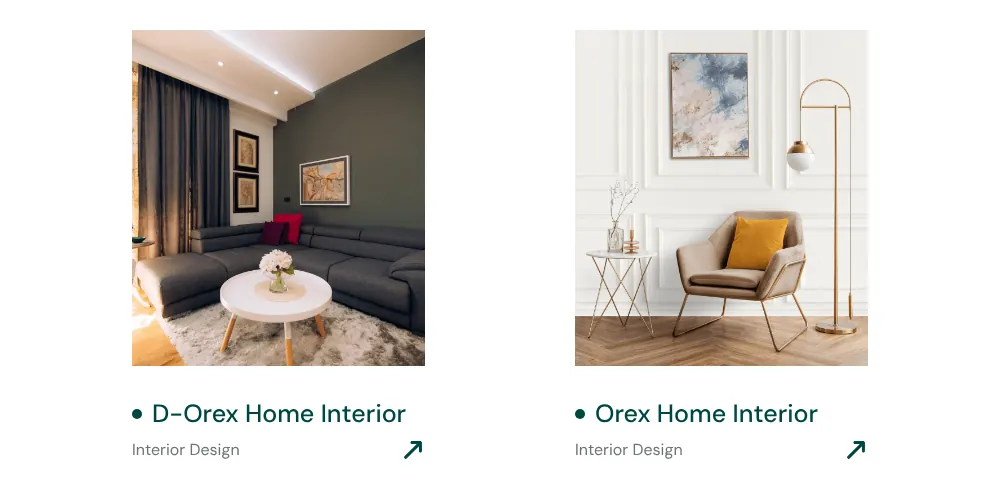
On a 390 px phone screen no page scrolled sideways, and the menu lists all 16 page types. Its button is a label for a hidden checkbox and has no name, so keyboard users can't reach it: at phone width, Tab goes from the logo straight to the hero button.
Sample copy written for other sites
Most of the text was written for other kinds of sites. The FAQ block, shown on seven pages, asks "How secure is my financial data on your platform?" and "Do you offer a free plan?", and answers like a SaaS product. The Problems, Solutions and Result text on all seven project pages, and the body of all nine blog posts, is privacy-policy wording about "how personal information is used to maintain the security of interior agency systems". All 15 gallery photos carry the caption "MAx De Lucia, Interior Designer", the four job openings link to Themefisher's Astro theme store, and a testimonial shows a raw code instead of an apostrophe ("couldn't"). The stats claim 31 years of work under a caption about 32 years, below a hero that calls the firm the best "since 1992".
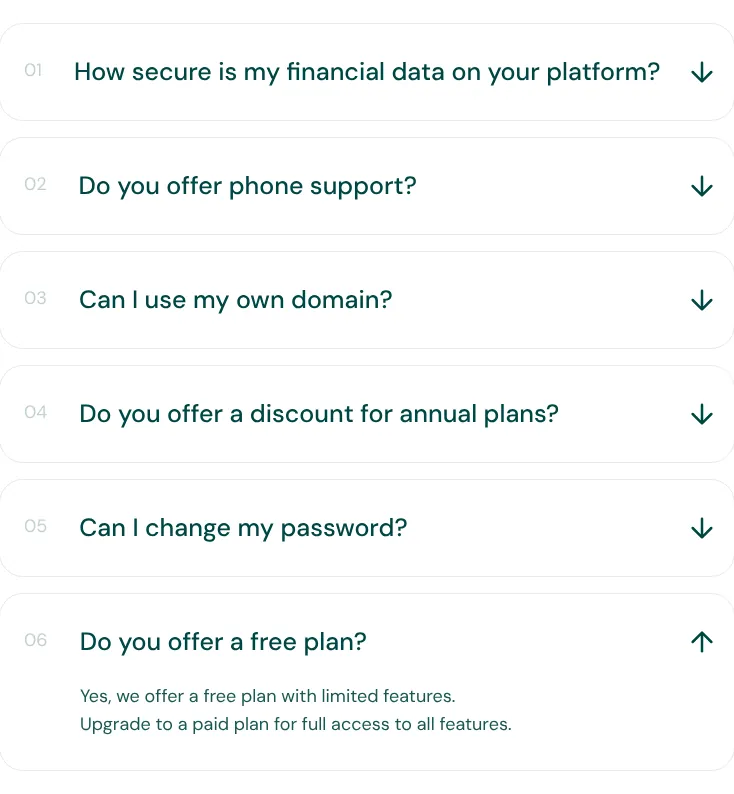
The contact form posts nowhere
The contact form's four required fields post back to the static page (its action is "#"), and the visitor lands on a blank page that reads "/contact"; nothing reaches a form service. The hero's "Book an appointment" button leads to the same form. Two fixes come before you connect one: the Inquire Subject field is named name, like Full Name, so a form service would receive two names and no subject, and typed text is grey on dark green at a contrast ratio of 1.42:1, against the 4.5:1 that WCAG asks for. The sample address in the footer, [email protected], uses the domain of an unrelated software company that receives email, so replace it before launch.
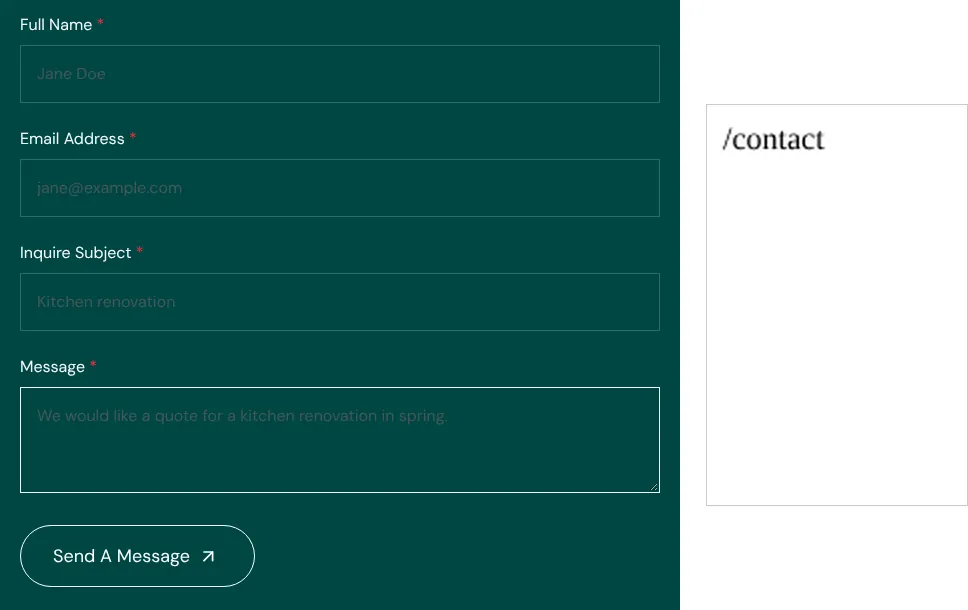
The setup guide predates Astro 7
Themefisher's setup guide, last updated on 17 February 2026, tells Mac users to install Node 18 and run npm. Since then the changelog has moved the theme to pnpm (9 June 2026) and to Astro 7, which requires Node 22.12 or later.
Performance and SEO
One Lighthouse 12.8.2 run per page and form factor, 31 October 2026:
| Page | Performance | Accessibility | Best practices | SEO |
|---|---|---|---|---|
| Home, mobile | 80 | 93 | 100 | 100 |
| Home, desktop | 99 | 93 | 100 | 100 |
| Project page, mobile | 75 | 97 | 100 | 100 |
| Project page, desktop | 93 | 97 | 100 | 100 |
Themefisher promises a PageSpeed score of 90 or more: both pages reach it on desktop and miss it on mobile, and images are the reason. The home page transfers 1,734 KiB, 1,521 KiB of it images, including full-size PNG backgrounds of 534 KiB (hero) and 697 KiB (testimonials). The project page sends three PNG photos of 393 to 823 KiB at full size, which put its largest paint at 10.4 s on the simulated phone. Lighthouse estimates that modern image formats alone would save about 1 MB on the home page and 1.5 MB on the project page. Layout shift stayed at or near zero. Accessibility points went for skipped heading levels and, on the home page, one line of low-contrast text.
React and its island code make up about 70 KiB of the 107 KiB of JavaScript on the home page, for four animated counters and six FAQ items. The counters render only in the browser, so their numbers are missing from the page's HTML until JavaScript runs.
None of the pages we checked has a canonical tag or structured data. Eight of the 30 pages in the sitemap carry the description "this is meta description", all nine blog posts share one description, and the home page's is the template's own name. Lighthouse's SEO score of 100 catches none of this.
What you still have to build
Form handling. Connect the contact form to a form service or your own endpoint with spam protection, rename the subject field and make typed text readable. Themefisher's support doesn't cover adding forms.
All of the copy. The FAQ, services, project case studies, blog posts, job openings, gallery captions, testimonials and stats, and the privacy page, which is lorem ipsum.
Photos and contact details. The license requires your own images. Also replace
[email protected], the two different sample phone numbers and the New York address.Image optimization. Serve the large PNG photos through Astro's image components, or compress them.
SEO basics. A description for every page, canonical tags and structured data for your business.
An accessible mobile menu. A real button with a name that keyboard users can reach.
Pros and cons
Pros
A structure that fits a studio: project case studies, a gallery, services, careers and a blog, 16 page types in all.
Fast on desktop (99 and 93) with almost no layout shift, and no page scrolls sideways on a 390 px screen.
Maintained: six releases between November 2025 and June 2026, the last to Astro 7.
MDX components for notices, tabs, accordions and video embeds in your own pages and posts.
Cons
The contact form posts nowhere, sends the subject as a second name and makes typed text hard to read.
Text from SaaS sites and a privacy policy fills the FAQ, every project page and every blog post.
Mobile scores of 80 and 75, below Themefisher's promise of 90, because of full-size PNG photos.
You can't try the Astro 7 build before buying, and the setup guide predates it.
One website per $97 license, and the Next.js version is a separate purchase.
How Nextspace compares
Themefisher's Astro Bundle: $137 for Nextspace and Themefisher's other premium Astro themes, with one project per theme and 12 months of downloads; Plus ($197) allows 10 projects per theme and lifetime downloads. Pick it if you will build a second site from any Themefisher theme.
Nextspace Nextjs: the Next.js version of the design, on Next.js 16 (version 1.1.0, July 2026), sold separately for $97. Pick it if your team works in React and Next.js.
Hatch: Shadcnblocks' $79 freelancer portfolio template with Next.js and Astro editions and 15 pages, per Shadcnblocks. Pick it for a one-person practice that wants a lighter portfolio and services site.
See all portfolio templates for more options.
Who should buy Nextspace
Buy it for an architecture, interior design or renovation studio with its own project photos and case studies, and a developer to connect the form, compress the images and finish the SEO settings. It is a poor fit if the site must take inquiries or appointments on day one, if nobody has time to rewrite the sample text on every page, or if your team works in Next.js.
FAQ
Does the Nextspace contact form send messages?
No. The demo's form posts back to its own page and the visitor sees a blank page; no form service is connected. You connect one yourself, and Themefisher's support doesn't cover adding forms.
Is there a Next.js version of Nextspace?
Yes, but it is a separate product. Nextspace Nextjs costs another $97 and runs on Next.js 16; the Astro purchase includes only the Astro theme.
Can I use Nextspace for client projects?
Yes, for one website per license. Themefisher's license allows personal and commercial use but counts one theme as one website, so a second site needs a second license or an Astro Bundle plan (Plus covers 10 projects per theme).
What happens after the first 12 months?
The site you built keeps its license, which does not expire. Downloads and updates end after 12 months, and support after 3, per Themefisher's plan details.
Can I get a refund?
Only in narrow cases. Themefisher refunds within 14 days if a theme isn't delivered or doesn't work as described and support can't fix it, but not for a change of mind or for purchases made at a discount.
KEEP EXPLORING
More templates