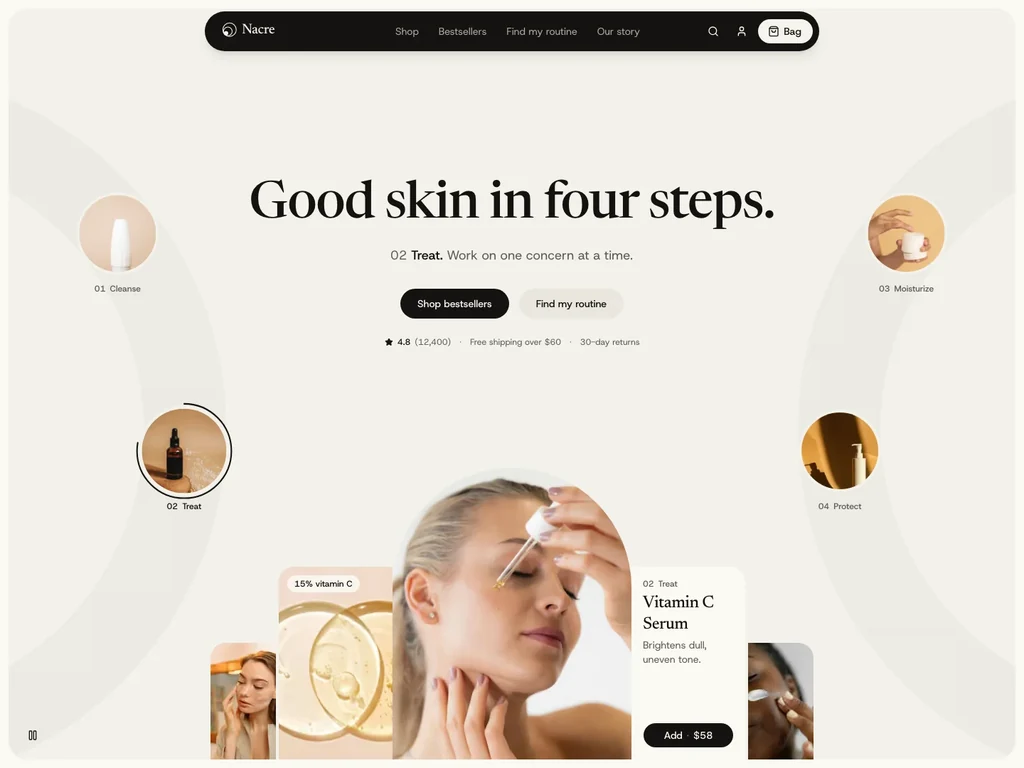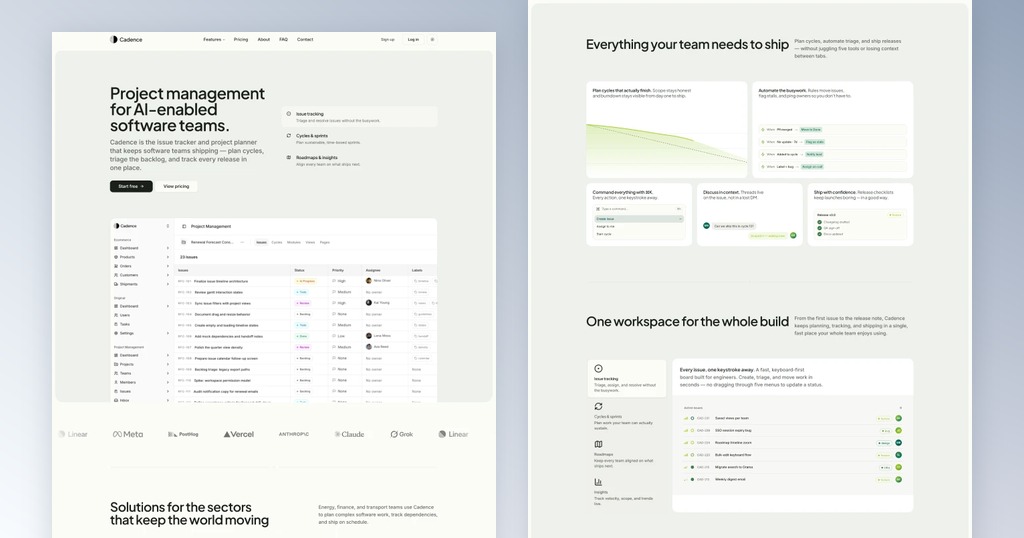
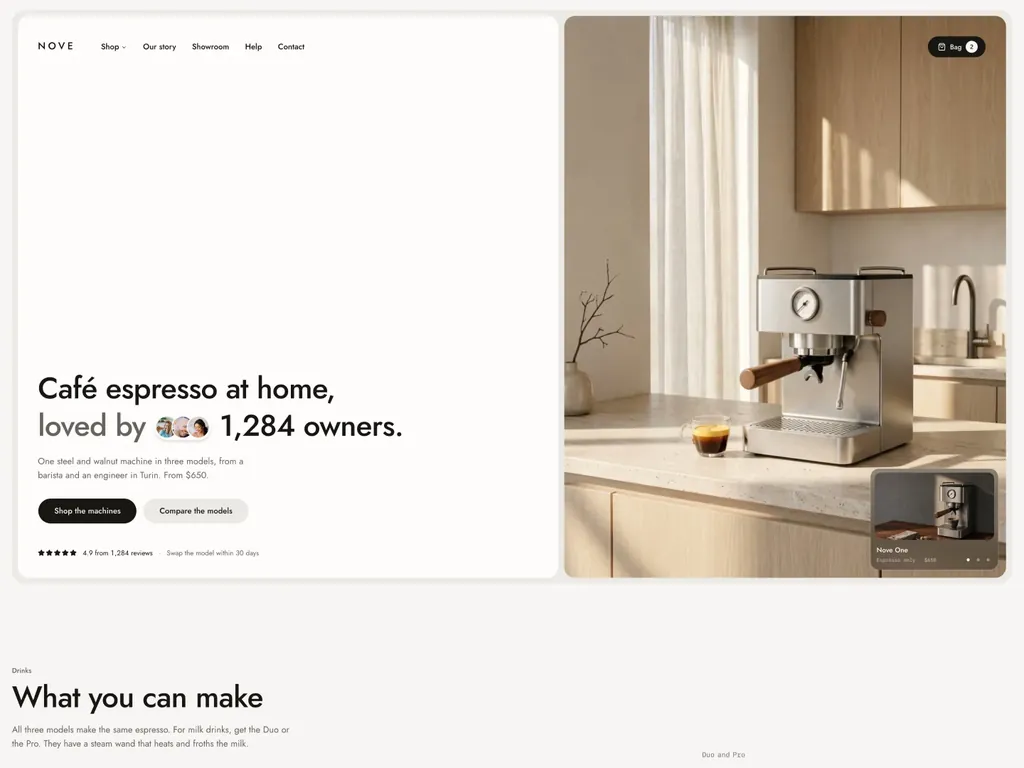
Next.js and Astro single-product store with a model picker and checkout UI
Buio
Monochrome Web3 SaaS theme for Astro with WebGL dither art and a whitepaper
PaidTemplates
lexingtonthemes.comExplore the product
AT A GLANCE
- Website
- lexingtonthemes.com
- Pricing
- Paid
- Categories
- Templates
- Listed
- Mar 2023
- Updated
- Oct 2026
Details about Buio
KEY POINTS
- Tailwind CSS v4
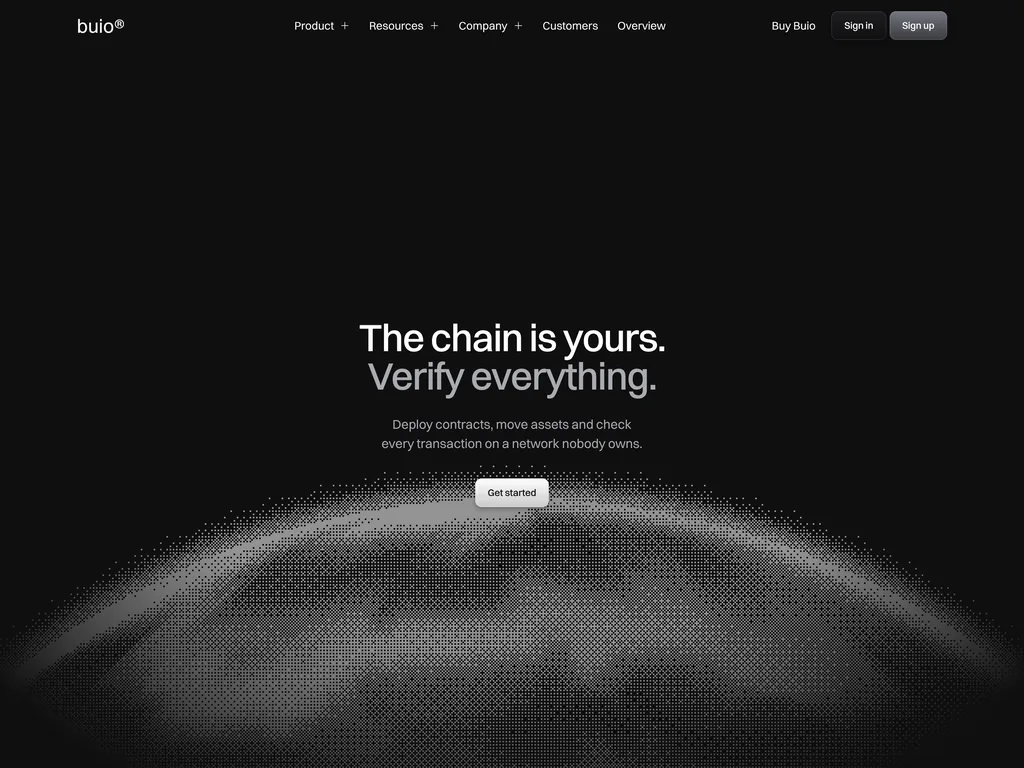
Short verdict: Buio is the most restrained of Lexington's dark SaaS themes: white ink on near black, a grey second line on every heading and 1-bit dither art drawn live in WebGL. It covers pages a Web3 product needs and most SaaS themes skip, such as a network status page, a chaptered whitepaper, a bug bounty policy and job listings, and its home page weighed only 109 KiB on mobile. The gaps are pricing (three plans on the home page, no pricing page or comparison table) and sample content that was restyled but not rewritten: the blog and changelog date from 2024 and January 2025. It suits a protocol, wallet or Web3 developer-tool team that will write its own copy; it fits a conventional SaaS with tiered plans poorly.
How we reviewed it: On 30 October 2026 we used the live Astro demo at 1440 px, at 1024 and 1100 px and on a 390 px phone screen. We opened the three menus, clicked the network-figure labels, checked the blog tags, read the status page and the whitepaper, crawled all 63 pages and submitted the contact, sign-in, sign-up, newsletter and job application forms while logging every request. We read the WebGL shader code and ran Lighthouse 12.8.2 on the home page and on a blog post. We did not buy the theme, so we can't judge the source code or the Sanity and EmDash editions, which have no public demo. Prices, editions and license terms come from Lexington Themes on the same day.
Disclosure: Our links to Lexington Themes carry a referral tag.
What you get for $89
| Price | $89 one-time for the Astro edition, $129 for the Sanity or EmDash edition. Lexington Themes Full Access Personal costs $99 (shown as 50% off $198) and includes all 53 Lexington Astro themes, so for $10 more you get this theme and every other one. |
|---|---|
| Editions | Astro (the public demo), Astro + Sanity ("the same designs wired to Sanity, with live preview editing") and Astro + EmDash (an admin built in, deployed to Cloudflare Workers), per Lexington. |
| Version | Astro 7.4.1 and Tailwind CSS 4.3.3, per Lexington; the demo's stylesheet confirms Tailwind 4.3.3. Redesigned on 20 October 2026. |
| Size | 63 pages in the demo, counting the 404: 13 static pages (home, team, status, knowledge base, contact, sign-in, sign-up, 404 and five style-guide pages) plus 6 blog posts, 3 changelog entries, 8 customer stories, 6 integrations, 6 help articles, 4 jobs, a whitepaper cover with 6 chapters, 4 legal pages and their index pages. |
| Stack | Astro and Tailwind CSS 4, vanilla JavaScript for the menus and Lenis smooth scrolling, and short WebGL shaders written without a library. No React, Vue or Alpine.js. |
| Delivery | A private GitHub repository through Polar.sh, with AGENTS.md, Cursor rules and a design skill for AI coding tools, per Lexington. No Figma file. |
| Deploys to | Any static host, such as Netlify or Vercel. Lexington's setup guide still says Node.js 20 or later, but Astro 7.4 requires 22.22 or newer. |
| License | Unlimited sites for yourself and for clients, including commercial and white-label work, with no attribution. No reselling as a template and no use as the core of a site builder; one seat per named person. License terms |
What we found in the demo
Dither art that stops when nobody is looking
A dithered planet turns behind the hero, a dithered terrain moves under the calls to action, the sign-in and sign-up panels get their own planet, and the 404 is drawn in pixels. We read the shader scripts: each draws at most about 30 frames a second, stops when it scrolls out of view and, for visitors who ask their system for reduced motion, draws one still frame. Blog covers and the six team portraits are dithered images, so the sample people stay anonymous. The shaders draw in white at fixed opacity, so they follow a new background color but not a new ink color.
The Web3 pages most SaaS themes skip
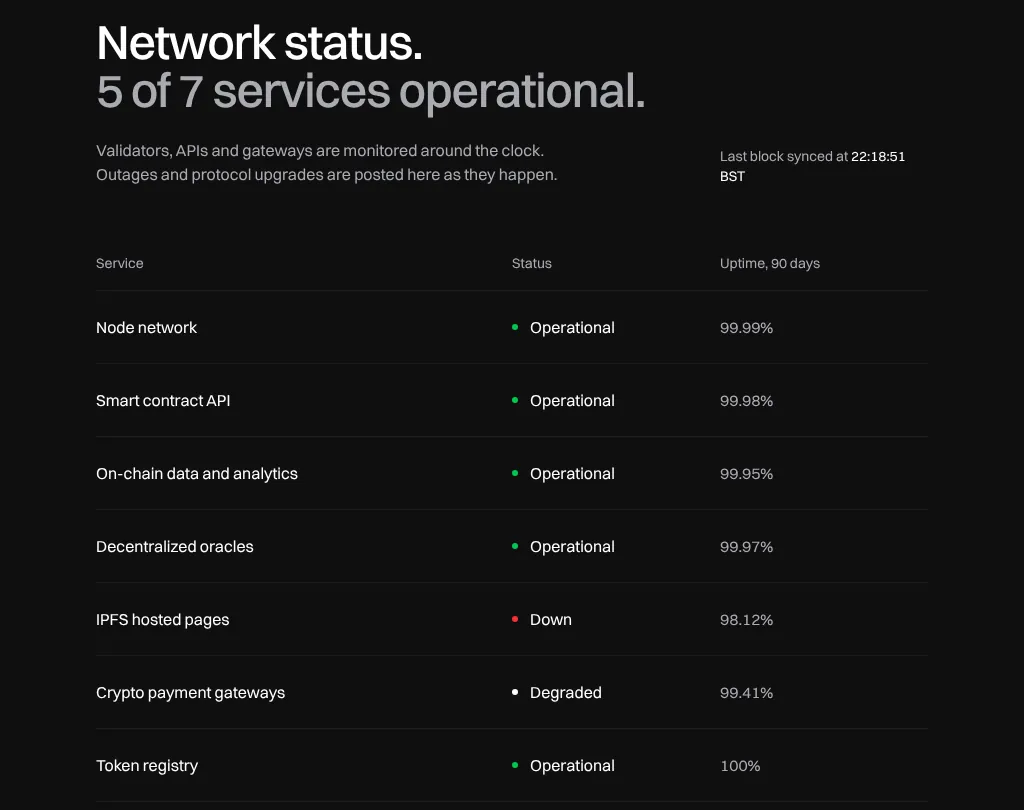
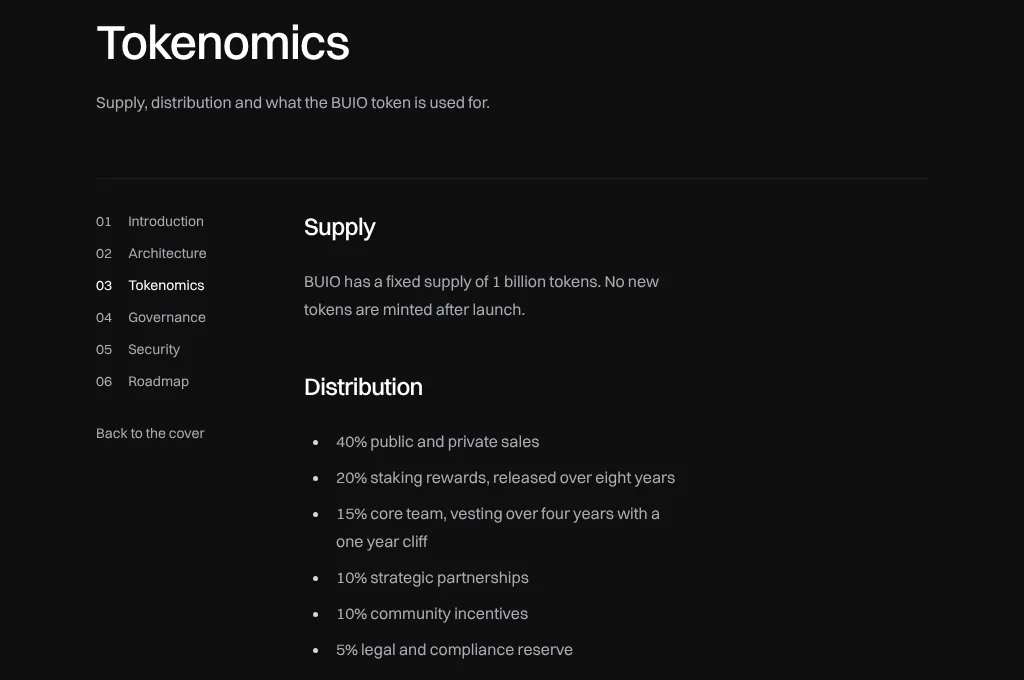
The status page reports "5 of 7 services operational" in a table of seven services with their state and 90-day uptime, followed by three past incidents. It is static, down to the "last block synced" time. The whitepaper has a cover and six chapters, from Introduction to Roadmap, with a sticky chapter list and previous and next links; the Tokenomics chapter covers supply, distribution and what the token is for. There are also four job listings with an application form, a knowledge base, and four legal pages written for the sample brand, including a bug bounty policy with rewards of up to $1,000,000.
Pricing is three plans on the home page
The 20 October redesign removed the pricing page, the second landing page, search, tag pages and team detail pages, per Lexington's changelog. What remains is a home-page block with three plans: Explorer at $0, Builder at $1,999 a month (marked Popular, "half price for your first three projects") and a custom Enterprise plan, with no billing switch or comparison table. Nearby, network figures sit under Q1 to Q4 2026 labels that look like tabs but do nothing when clicked.
Sample content from an older version
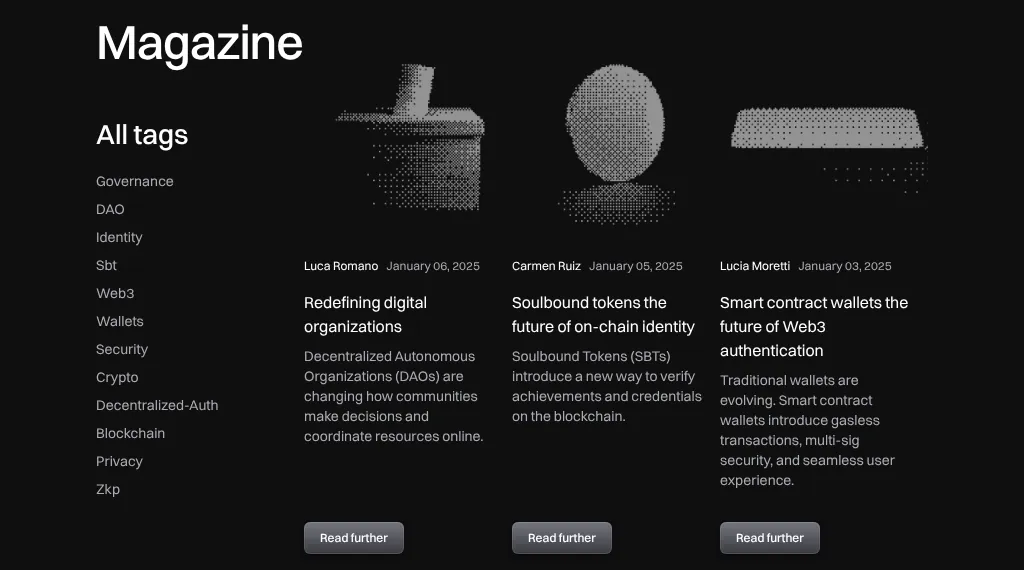
The redesign restyled the blog and changelog but kept older entries: six posts dated January 2024 to January 2025 and three releases from 2024 and 2025, in marketing copy ("a game-changing update") the rest of the site avoids. The megamenu's featured cards pick up the newest entries, so the Product menu announces a "Latest release, January 2025". The six help articles are generic, and the blog's list of 12 tags is plain text, since tag pages are gone. Figures disagree too: the home page says 4,000 teams run on Buio, the customers page says 1,200+.
Navigation, forms and mobile
Three megamenus pair a list of links with a featured card. Between 1024 and about 1100 px the desktop bar runs out of room: at 1024 px "Buy Buio" overlaps "Overview" and the sign-in buttons wrap onto two lines. Both links are demo-only, and with them removed the bar fits. None of the forms is connected. Contact, sign-in, sign-up, the newsletter box and the job application have no action, so submitting reloads the page with every field in the URL, the password included, and the job form's file upload has nowhere to go. On a 390 px screen we found no sideways scrolling.
Performance and SEO
One Lighthouse 12.8.2 run per page, 30 October 2026, on a shared test machine:
| Page | Performance | Accessibility | Best practices | SEO |
|---|---|---|---|---|
| Home, mobile | 96 | 90 | 96 | 92 |
| Home, desktop | 69 | 90 | 96 | 92 |
| Blog post, mobile | 87 | 100 | 96 | 92 |
| Blog post, desktop | 99 | 100 | 96 | 92 |
Buio is the lightest of the three Lexington SaaS themes we tested: the home page transferred 109 KiB on mobile, 53 KiB of it fonts (Switzer and Geist Mono) and 6 KiB JavaScript. The desktop score of 69 comes from 680 ms of total blocking time, and the report shows the cause: 15.9 s of main-thread work classed as "other" against 156 ms of scripting. That is WebGL drawn in software by our test browser, which has no GPU, not heavy JavaScript, so the number says more about our machine than about the theme; still, try the shaders on the slowest computer you support. Accessibility lost points for comments in the code sample (contrast 4.25:1, below the 4.5:1 minimum) and a definition list wrapped in extra divs. Lexington's product page lists 100, 90, 100 and 92.
SEO scores 92 because every page carries two canonical links to different placeholder addresses, https://yoursite.com/current-page and https://www.yourwebsite.com/. All 63 pages also share the title "Your Page Title" and a placeholder description. The sitemap (62 URLs) and RSS feed (6 posts) are generated for yourdomain.com until you set your site URL, and no page has structured data.
What you still have to build
Wallets and accounts. The wallet-connect code on the home page is an illustration, and sign-in and sign-up are screens only.
Forms. Endpoints for contact, the newsletter and job applications, sent by POST, with file handling for the application.
Status. Connect the status page to a monitoring service or keep it current by hand.
Pricing. A pricing page or comparison table if your plans need more than three cards.
Content and metadata. New posts, release notes and help articles, figures that agree, real titles and descriptions, one canonical link per page, and the favicon and manifest files the layout expects.
Policies. The legal pages describe the sample network; the bug bounty's $1,000,000 ceiling and four-hour reply promise must become your own terms or go.
Pros and cons
Pros
Light pages (109 KiB home page on mobile, 6 KiB JavaScript) with dither art that pauses off screen and respects reduced motion.
The Web3 pages are designed: network status, chaptered whitepaper, bug bounty, jobs and knowledge base.
Legal pages written for the sample product rather than copied boilerplate.
Accessibility of 100 on blog posts, with two small fixes needed on the home page.
Cons
No pricing page or comparison table, only three plan cards.
Blog, changelog and help content is older and generic, and the menu presents it as new.
Two canonical links and a placeholder title on every page.
Forms send nothing and put passwords in the URL until you wire them.
Dark only, and the desktop bar overlaps at 1024 px until you remove the demo links.
How Buio compares
Flabbergasted ($89, also by Lexington) is the other dark SaaS theme, made for voice AI and developer APIs. It has five plans with an annual switch and a 20-feature comparison table, but loads about 450 KiB of fonts per page and its legal pages are leftovers. Pick it if plan detail matters more than Web3 pages.
Alfred ($89, Lexington) is the light option, for security products, with a separate pricing page, a status page and written incident reports.
Relay by Cruip ($79) is a dark, developer-first SaaS template in Next.js 16 or Astro 6 with a searchable docs section, status and security pages and a Figma file, per Cruip. Pick it if your protocol needs developer docs next to the marketing pages; Buio has a whitepaper and a knowledge base but no docs.
See all Tailwind templates for more options.
Who should buy Buio
Buy it if you are launching a protocol, wallet or Web3 developer tool, want a sober monochrome site with a whitepaper, a status page and a bug bounty already laid out, and will write your own posts and release notes. Look elsewhere if you sell a conventional SaaS with tiered plans or need documentation or a light theme.
FAQ
Does Buio have a pricing page?
No. Lexington removed it in the 20 October 2026 redesign. The home page has three plans (Explorer at $0, Builder at $1,999 a month and a custom Enterprise plan) without a billing switch or a comparison table.
Do Buio's WebGL animations slow the site down?
Not much in our tests. The home page scored 96 for performance on mobile with no blocking time, and the shaders cap themselves at about 30 frames a second, stop when off screen and show a still frame to visitors who prefer reduced motion. Our desktop run scored 69, but that blocking time came from software rendering in a test browser without a GPU.
Does Buio connect to crypto wallets?
No. The wallet code on the home page is a sample, and the sign-in and sign-up screens are not connected to anything. You add a wallet library and your own backend.
Is Buio cheaper as part of Lexington Full Access?
Usually, yes. Buio alone costs $89, while Full Access Personal costs $99 (shown as 50% off $198) and includes all 53 Lexington Astro themes, so for $10 more you get this theme and every other one.
Can I use Buio for client projects?
Yes. Lexington's license allows unlimited websites for yourself and for clients, including commercial and white-label work, without attribution. You can't resell the theme as a template, and each seat covers one named person.
KEEP EXPLORING
More templates