Posture 12 November 2026 · 6 min read
Five small changes for a desk that hurts less
Most desk pain comes from staying still, not from sitting badly. Start with these five changes.
By Maya Lindqvist, Founding physiotherapist
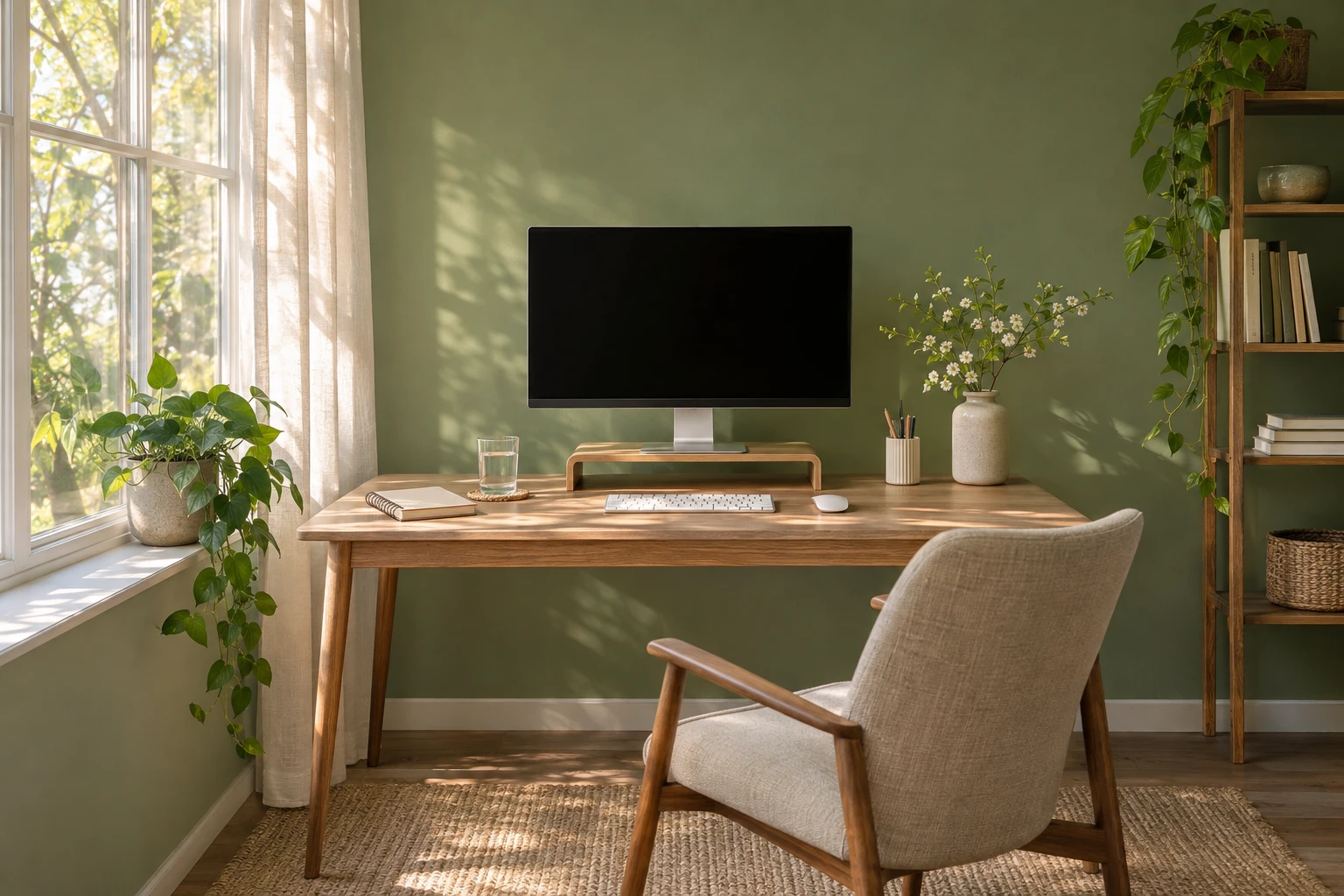
People often arrive convinced that they sit badly. Usually the chair is not the problem. The problem is the hours without moving. A body that changes position often copes with almost any desk, and a body that holds one position all day complains about the best one.
So before you buy a new chair spend anything, change how the day runs. The five changes below
cost nothing. If you want the background first, read
what happens in a first session; if you only remember one thing,
make it this: the best posture is the next one.
Why sitting still is the problem
Joints are fed by movement, and muscles that hold one length for hours tire and tighten. In the studio we see the same pattern again and again: the hours spent still matter more than the angle of anyone's spine.Note 1
I stopped looking for the perfect chair and set a timer instead. The pain was gone in ten days.
A client, after her second visit
The five changes
Take them in order. Each one makes the next easier.
-
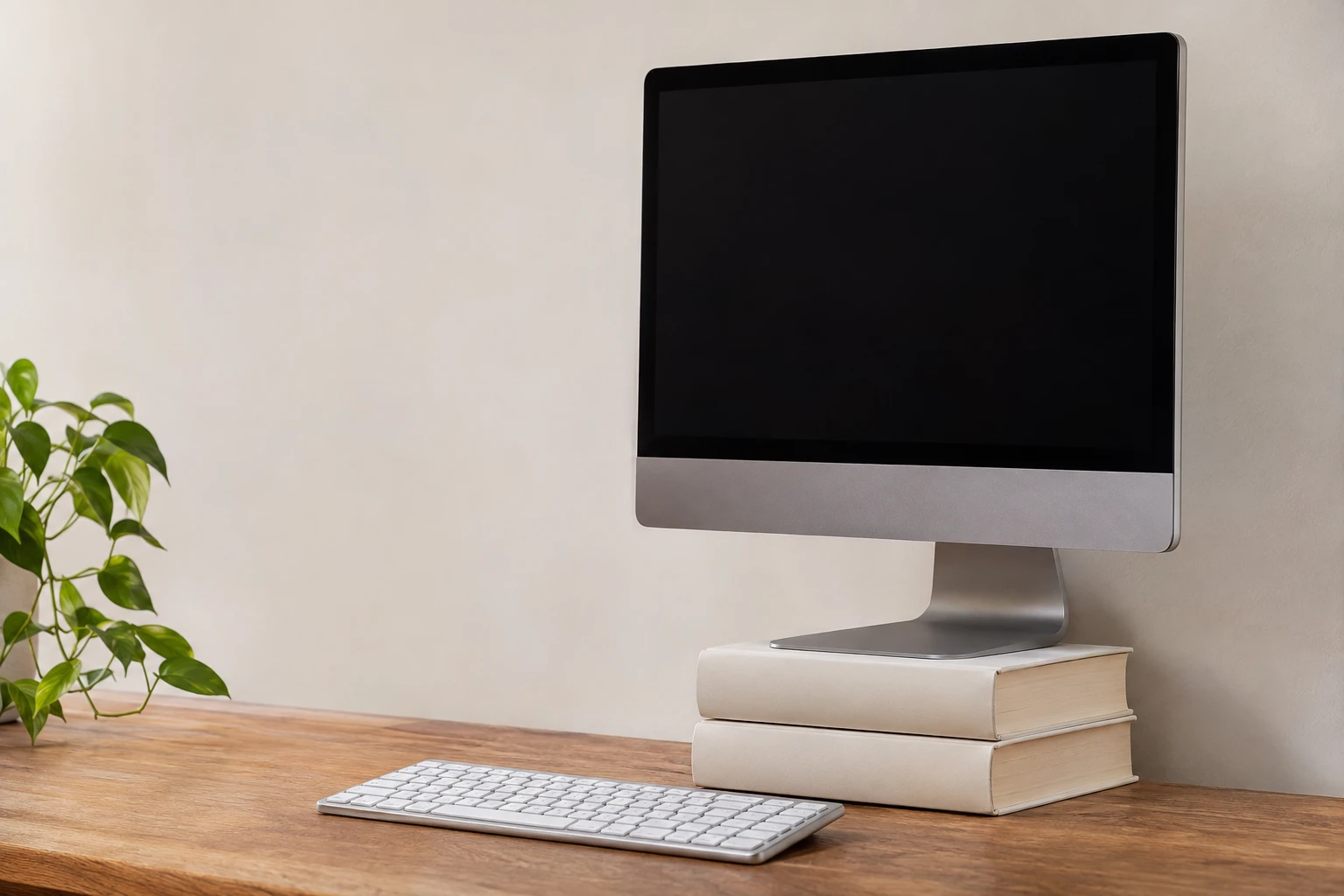
Raise the screen until its top edge is at eye height.
- A laptop needs a stand and a separate keyboard.
- With two screens, put the one you use most straight ahead.
- Bring the keyboard closer, so your elbows stay by your sides.
- Stand up every thirty minutes, even for one minute.
- Take calls on your feet.
- Change position before it hurts, not after.
A week to make it a habit
Add one change a day and keep the earlier ones going.
| Day | Change | Time it takes |
|---|---|---|
| Monday | Raise the screen | 5 min, once |
| Tuesday | Move the keyboard closer | 2 min, once |
| Wednesday | Stand up every thirty minutes | 1 min, 14 times |
| Thursday | Take calls on your feet | as they come |
| Friday | Change position before it hurts | all day |

Check your desk
Two minutes, before you start tomorrow:
“Movement is not a break from work. It is what lets you keep working.”
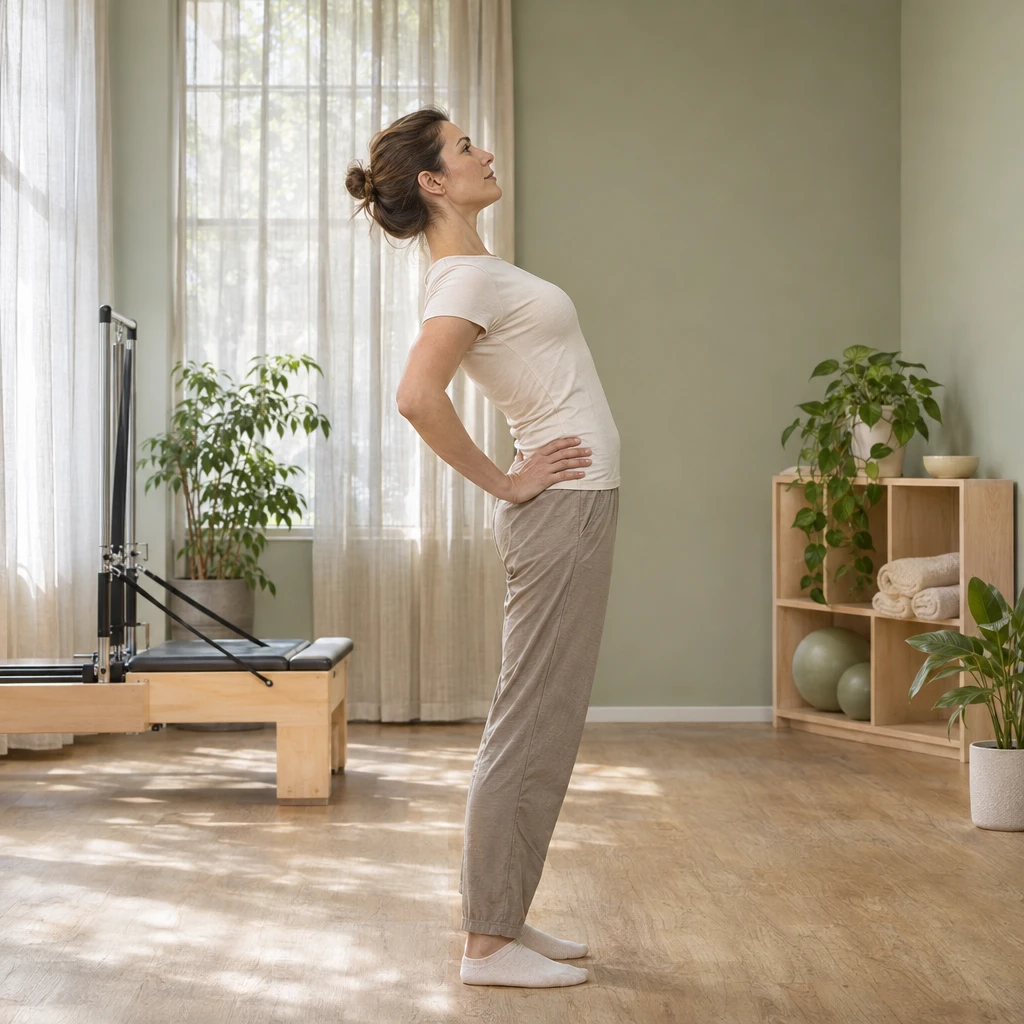
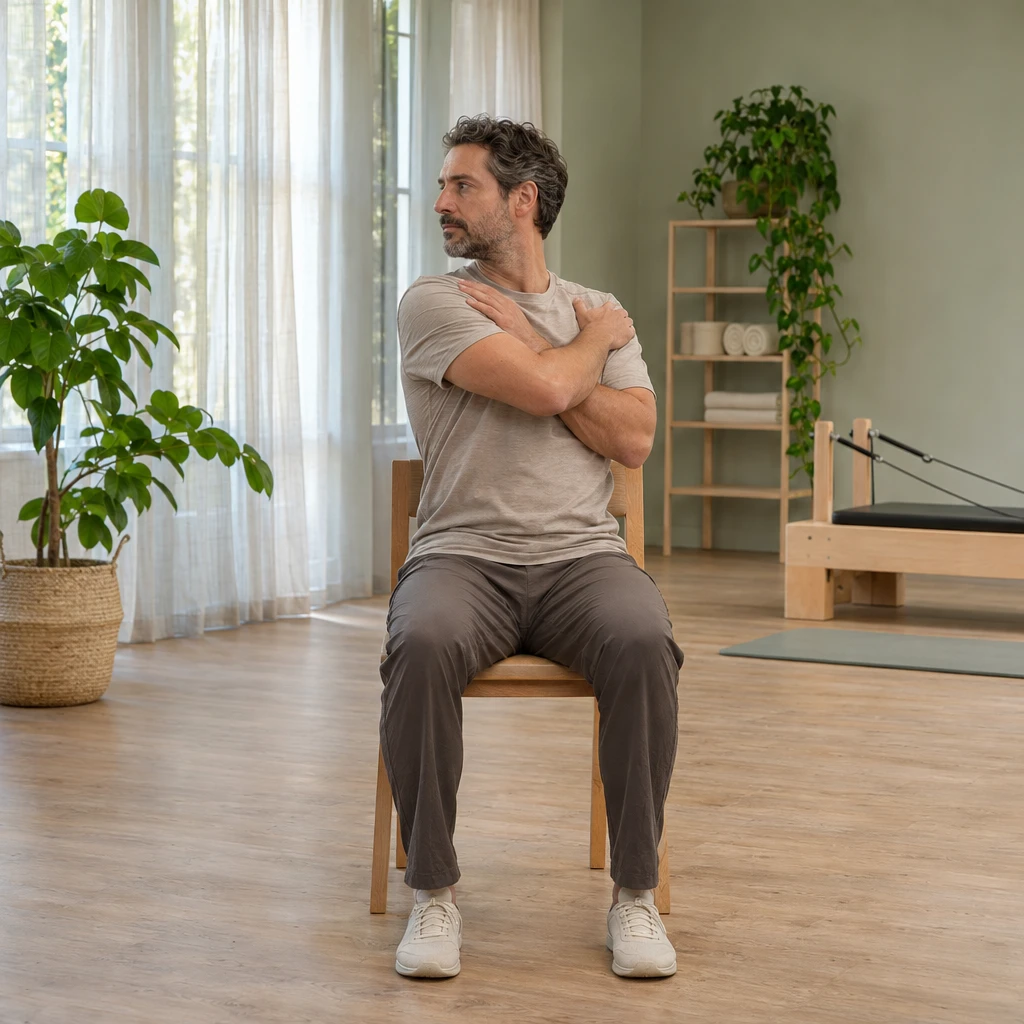
Three moves for a standing break
Ten slow repetitions of each. Nothing should hurt.

A reminder you can paste into your calendar
Most calendar apps read this format. The line that matters is RRULE: it repeats the event
every hour of the working day.
BEGIN:VEVENT
SUMMARY:Stand up
DTSTART:20261116T090000
DURATION:PT2M
RRULE:FREQ=HOURLY;BYHOUR=9,10,11,13,14,15,16;BYDAY=MO,TU,WE,TH,FR
END:VEVENT
Questions we hear
Do I need a standing desk?
No. A standing desk helps only because it makes changing position easy. Standing still all day brings its own aches. If you have one, switch every thirty to forty-five minutes.
Is a firm chair better than a soft one?
Choose the chair you can move in. Firmness matters less than being able to sit back, sit forward and stand up without effort.
How soon should it feel better?
Most people notice less stiffness within a week. If nothing has changed after two weeks, or the pain is getting worse, book an assessment.
When to ask for help
Most desk pain settles with movement. Book an assessment when the pain:
- wakes you at night;
- travels down an arm or a leg, or comes with numbness;
- has lasted more than two weeks without easing.Note 2

Notes
- This is a note. Use notes for sources and asides that would interrupt the text. ↩ Back to the text
- Sooner if the pain follows a fall or an accident. ↩ Back to the text